

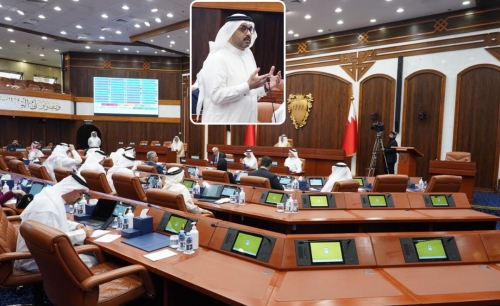
SME Fund Bill Heads to Parliament Amid Government Pushback
TDT | Manama
Email : editor@newsofbahrain.com
A reworked plan to create a state-backed fund for micro, small and medium enterprises goes before Parliament on Tuesday, after a key committee rewrote most of the draft law but still backed it in principle.
The Financial and Economic Affairs Committee has taken a parliamentary proposal to create a National Fund for the Care and Support of Micro, Small and Medium Enterprises and reworked its title, wording and structure to sit alongside existing laws. The bill would set up a public body with its own legal personality and financial and administrative independence, under the oversight of a minister named by decree, to back Bahraini-led projects across industry, crafts, knowledge-based fields and technology.
MPs will debate the measure in the knowledge that the government has asked them to think again. Ministers say many of the fund’s aims overlap with the Labour Fund (Tamkeen), that its incentives touch laws on fees, customs, industrial zones and state land, and that its proposed powers over exemptions risk adding pressure to the state budget and upsetting the Fiscal Balance Programme. Business groups are divided, with the Bahrain Chamber of Commerce and Industry urging care over duplication while associations representing small firms urge Parliament to press ahead.
Under the amended text, the fund’s main purpose would be to support the Bahraini private sector and help develop the domestic economy by backing micro, small and medium projects. It would aim to draw more young Bahrainis into free enterprise, support ventures run by citizens, help owners plan and expand their businesses and encourage self-employment as part of efforts to build up the domestic workforce.
A new article added by the committee gathers the fund’s powers into one place. The fund would be able to support the preparation and assessment of economic and environmental feasibility studies, train and qualify Bahraini talent and provide backing directly or indirectly through soft loans, guarantees, incentives and other benefits. It would offer administrative, technical and technological support, help projects obtain licences and complete procedures and build a central database to aid the exchange of information and experience. It would also be allowed to own and invest movable and immovable property and enter into contracts and transactions that serve its aims, while required to work efficiently and transparently and stay in line with state labour-market and development policies.
Key terms have been made more precise. A ‘project’ is now defined as a micro, small or medium venture in industrial, craft-based, knowledge-based or technological fields, or any other economic activity owned by a natural or legal person. The minister would issue a decision setting the criteria used to classify enterprises by size. A ‘project incubator’ remains a body that offers services and an appropriate work environment in the early years of a project to raise its chances of success and growth. A separate definition for ‘supporting institutions’ has been removed.
The committee has also changed the fund’s name throughout the text to the ‘National Fund for the Care and Support of Micro, Small and Medium Enterprises’ and reworked the preamble so that main framework laws such as those on the Future Generations Reserve and the Labour Fund are referred to in their amended form, without listing the latest amending statute.
The fund’s income would come from allocations in the state budget, land placed at its disposal by private owners for long-term use and investment, transfers from Tamkeen, sums drawn from the Future Generations Reserve, grants and donations accepted by the board and returns on its own investments. The bill states that the fund’s assets are to be treated as public money for the purposes of the Penal Code, so that criminal liability in cases of abuse can apply.
Governance rules have been rewritten. The fund would have a board of directors formed by decision of the Prime Minister, who would set its make-up, term, working rules and voting procedures. The board would be the top authority responsible for the fund’s affairs, policy and oversight. Its tasks would include setting the general approach for achieving the fund’s aims, issuing financial and administrative regulations, approving the fund’s organisational structure and staff rules and laying down standards and procedures for support so that any assistance matches beneficiaries’ ability to repay where repayment is required.
The board would seek financial, in-kind and technical backing from individuals, companies, local institutions and specialist organisations, rule on applications for support, decide how many projects to back each year and in which fields and send regular reports to the Cabinet listing supported projects, their activities and the number of Bahraini workers they employ. It would approve plans to invest surplus funds in low-risk channels, appoint external auditors, decide on complaints and grievances, approve the draft annual budget and final accounts and examine periodic progress reports from the chief executive.
The chief executive would be appointed by the Prime Minister on a recommendation from the board, for a term of three years that can be renewed twice. The fund would have an administrative apparatus made up of experts and specialists tasked with examining projects, supervising their implementation and testing their economic feasibility.
Conditions for benefiting from the fund’s care and support have been tightened. A project owner would have to be a Bahraini natural person aged at least 21, or a Bahraini legal person that is at least 51 per cent owned by a Bahraini. The owner must be of good conduct and, if a natural person, must devote himself fully to managing the project. The project must be shown to be economically viable. When it comes to land which the fund seeks to allocate, priority would go to project owners who have not previously received land from the state, and the Bahrainisation rate in the project must not fall below 50 per cent.
The draft makes clear that any change to a supported project’s structure requires the fund’s consent. Any decision to reduce capital, merge, sell, liquidate, transfer to a third party or change the legal form of the project would need prior approval. If a breach is proven, the fund would have the right to recover the cost of the support it has provided.
On the incentive side, the fund would, in co-ordination with the competent authorities and in line with current legislation, be able to create units and shops and seek commercial and industrial plots for projects on easy terms. It could establish incubators that provide services to project owners for a symbolic annual subscription for up to two years, during which they gain experience before moving out. The fund would be allowed to exempt imported equipment, inputs, raw materials and intermediate goods from customs duties for up to two years, waive municipal fees for up to two years and include projects in the government support band for electricity and water for the same period. Supported projects’ products and services could be given price preferences in public procurement and contracting, and project owners could be granted access to exhibition space and public locations at symbolic rents, along with any further incentives the board may approve.
In a detailed opinion, the government has asked MPs to reconsider the bill. It says many of the fund’s purposes and tools repeat those already assigned to Tamkeen under Law 57 of 2006, which was created to back Bahraini enterprises, including micro, small and medium ones, through grants, marketing support, technology schemes and co-financed bank loans. In the government’s view, there is no need for a second fund with overlapping aims and similar channels of support. It also says the proposal lacks the economic, financial and technical studies needed to test the feasibility of the new fund and judge its likely impact on public finances.
Further concerns raised relate to the Constitution and other laws. Clauses allowing the fund to grant discounts on government fees and on the cost of public services are said to clash with constitutional rules on revenue and with laws that set the conditions for exemptions. Some of the suggested revenue sources touch rules for disposing of state land, using the Future Generations Reserve and running the Labour Fund. Certain incentives for projects overlap with existing provisions on industrial zones, customs and municipal charges. The government warns that giving the fund discretion to grant such advantages would add new pressures on the state budget, cut across the Fiscal Balance Programme and risk higher deficits and public debt.
The Ministry of Finance and National Economy and the Future Generations Reserve Council have echoed those reservations. They stress the need for full economic and financial studies to ensure that any law fits the Economic Recovery Plan, under which small and medium enterprises in promising sectors have already been targeted through Tamkeen programmes. They note that money in the Future Generations Reserve can only be used for non-investment purposes through a special law and point to recent progress in raising the share of bank financing going to small and medium enterprises, which climbed from 4.8 per cent in 2022 to 10.5 per cent in 2023. They also cite the Liquidity Support Fund, launched in 2019 and doubled from BD100 million to BD200m during the Covid-19 crisis, as an existing tool to help companies handle cash-flow strain.
Tamkeen has backed the government’s stance. It says that micro, small and medium enterprises already account for around 98 per cent of the institutional support it has given since it was formed, through a range of schemes such as business development, start-up support, enterprise growth packages, technology support, marketing services and loan-support programmes run with local banks. It also recalls the Business Continuity Support Programme introduced during the pandemic to help affected sectors recover.
The Bahrain Chamber of Commerce and Industry has warned against overlap with the Small and Medium Enterprises Development Fund, a BD100m fund managed by Bahrain Development Bank in partnership with the public and private sectors and supported by Tamkeen and local banks. It has called for a rethink of the bill’s mechanism, cautioned against extra administrative burdens and argued for a more joined-up legislative approach rather than scattered measures that could unsettle the wider economy.
Associations representing small and medium enterprises take a different line. The Bahrain Society for Small and Medium Enterprises Development and the Bahrain Small and Medium Enterprises Society both support the draft law, saying it would strengthen Bahraini traders, widen opportunities for entrepreneurship, open the way for young citizens to enter free business and help cut unemployment, while limiting foreign dominance of local micro, small and medium firms. One of the societies has gone further, proposing a state authority for small and medium enterprises reporting directly to the Office of the Crown Prince and Prime Minister, under which financing bodies, policy units and entrepreneurship and technology arms would be grouped, guided by a mixed public–private advisory council.
MPs will now have to weigh these arguments when the reworked draft goes before the Council of Representatives on Tuesday. If it passes in its amended form, the bill will move on to the Shura Council, keeping efforts to give micro, small and medium enterprises a dedicated legal framework and state-backed fund on the table.
Related Posts