

Inside Iran’s Nuclear Ambitions: From Origins to Tensions Today
AFP | Vienna, Austria
Email : editor@newsofbahrain.com
🔹 Nuclear roots date back to the 1950s
🔹 Iran remains the only non-nuclear weapon state enriching uranium to 60%
🔹 Recent US strikes on Iranian sites intensify global concerns
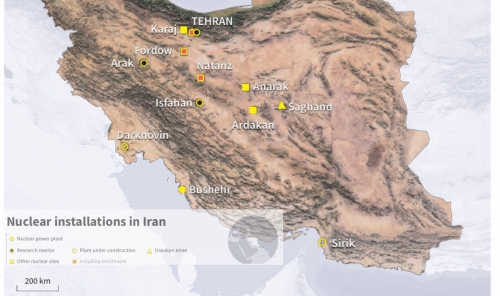
A week after Israel’s unprecedented military strike against Iran, the United States escalated tensions further with overnight attacks on three Iranian nuclear facilities. The strikes underscore mounting international alarm over Iran’s expanding nuclear programme — a dispute decades in the making.
A Programme Decades in the Making
Iran’s nuclear ambitions trace back to the late 1950s, when it began receiving technical assistance from the United States under a civilian nuclear cooperation agreement signed by then-Shah Mohammad Reza Pahlavi.
Iran became a signatory of the Treaty on the Non-Proliferation of Nuclear Weapons (NPT) in 1970, committing to peaceful nuclear development under the supervision of the International Atomic Energy Agency (IAEA).
But by the early 2000s, revelations about undeclared nuclear sites raised international suspicion. A 2011 IAEA report found that Iran had conducted activities “relevant to the development of a nuclear explosive device” at least until 2003.
Hope in Vienna, Fallout in Washington
After suspending parts of its enrichment activities, Iran entered negotiations with world powers. These culminated in the 2015 Joint Comprehensive Plan of Action (JCPOA), signed in Vienna with the five permanent UN Security Council members (US, UK, France, China, and Russia) plus Germany. The deal imposed strict limits on Iran’s nuclear programme in exchange for sanctions relief.
That diplomatic breakthrough unraveled in May 2018, when then-US President Donald Trump unilaterally withdrew from the JCPOA and reimposed sanctions. Tehran responded with what analysts call a “strategy of escalation.”
Escalation and Enrichment
In defiance of the JCPOA, Iran raised its uranium enrichment levels:
-
From 3.67% (the JCPOA cap)
-
To 5%, then 20%, and eventually 60% in 2021 — alarmingly close to the 90% threshold needed for weapons-grade material.
As of May 17, 2025, Iran possesses 408.6 kg of uranium enriched to 60% — a 50% increase since February. Given that around 42 kg at this level is enough for one bomb if further enriched, Iran now theoretically holds enough material for more than nine nuclear weapons.
Iran has also exceeded limits on the number and type of centrifuges in operation, using advanced models to accelerate production.
No Evidence of a Weapon — Yet
Despite the quantity of enriched material, the IAEA has stated it has “no indication” that Iran currently has a systematic programme to build a nuclear weapon. Nuclear arms require more than enriched uranium: precise engineering, ballistic delivery systems, and warhead miniaturisation are all essential steps — none of which are confirmed.
In March, US Director of National Intelligence Tulsi Gabbard testified that Iran is not actively building a nuclear bomb.
Iran continues to deny all nuclear weapons ambitions, citing a religious edict (fatwa) issued by Supreme Leader Ayatollah Ali Khamenei banning the development and use of atomic arms.
Diplomacy Under Fire
Recent Israeli strikes on Iranian military and nuclear sites, coupled with the latest US bombings, have further damaged hopes for reviving the JCPOA. Talks mediated by Oman had resumed in April 2025, but the attacks have prompted Iran’s Foreign Ministry to accuse Washington of committing “illegality and crimes” to aid Israel.
While US officials express confidence that a renewed nuclear deal is still possible, Tehran maintains that recent aggression has dealt a “serious blow” to diplomacy.
Why It Matters
Iran is now the only non-nuclear weapon state enriching uranium to 60%, a position that drastically reduces its “breakout time” — the time it would need to produce a nuclear weapon if it chooses to. With over 400 kg of near-weapons-grade uranium, the stakes have never been higher.
The world watches as Iran walks the fine line between legal enrichment and potential weaponisation — a line that could redefine security in the Middle East and beyond.
Related Posts