

‘Uncertain outlook for GCC’
Manama : CFA Institute, the global association of investment professionals, yesterday unveiled the results of its sixth annual Middle East Societies Market Sentiment Survey, which provides market insights from CFA charterholders and members in the Middle East.
According to the survey, low oil prices, geo-political instability and lower government expenditure are the three most important economic issues for the region in 2016, with respondents noting that revenue diversification strategies will also play a significant role in market performance.
Around 33pc respondents pointed out that the introduction of VAT would increase inflation rates across the GCC, while over a quarter (28pc) also expressed the concern that it will increase the cost of doing business.
Another area of concern was the GCC job market, with 63pc believing that employment opportunities for finance professionals in the GCC will continue to decrease in 2016, thanks to banks and other financial institutions announcing job cuts.
The survey also suggests that low oil prices (71pc), geo-political instability (44pc) and lower government expenditure (45pc) will be the most important economic issues over the next 12 months.
Cycle of slowdown
Market conditions will lead to business consolidation for organisations, according to 32pc of respondents, some of who also stated that a cycle of slowdown is likely to be a common experience for businesses during this time, although 23pc believe that growth is still possible.
The survey also predicts further declines in the sovereign credit ratings of GCC countries. Increased debt raising activities across the market are anticipated by 82 pc of respondents.
Dubai most positive
Equity markets in Bahrain and Saudi Arabia will be the most affected markets in the GCC, according to 64pc of respondents. Dubai was rated as the most positive in terms of outlook, with 35pcof respondents confident of strong performance.
The same proportion of CFA professionals believe that investor confidence is as low as it was during 2008/09 as those who believe that the overall sentiment is currently more positive (29pc and 28pc respectively).
Professional qualification
Almost all respondents (91pc) believe that it is important for GCC nationals to undertake professional qualifications because it is vital for the regional economy to have a local population with internationally-recognised credentials, which currently is not the case.
The outlook for the Euro will continue to be negative over the course of 2016, according to 48pc of respondents. The Eurozone’s economic and refugee crisis could be a catalyst for the poor performance of its currency according to CFA members. Additionally, 42pc feel the same way about the British Pounddue to the looming threat of a Brexit.
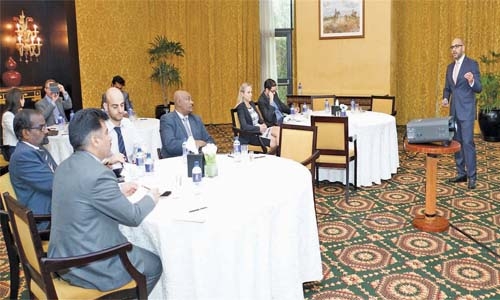
The survey results were unveiled at a media roundtable ahead of the 2016 Middle East Investment Conference (MEIC), which is taking place in Bahrain for the second time.
Related Posts