

Universities to Help Capital Test AI in Parks
TDT | Manama
Email: mail@newsofbahrain.com
A push to bring artificial intelligence into parks, housing and municipal services is gaining ground, with the Capital Trustees Board seeking university help to test how AI cameras could track park use, spot safety risks and help decide when gates should open and close.
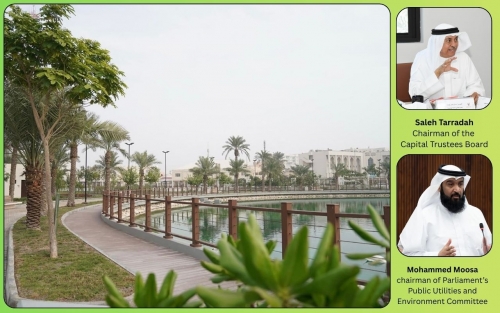
Capital Trustees Board chairman Saleh Tarradah told The Daily Tribune that the board wants to work with universities in the coming months on ways to use AI in municipal work.
One idea is to link cameras in public parks to software that can study visitor numbers, peak hours, age groups and how long people stay.
The move has won support in Parliament, where Mohammed Moosa, chairman of Parliament’s Public Utilities and Environment Committee, called for greater use of AI, smart-city systems and electronic services in running public utilities.
He said AI could help speed up building and urban-planning procedures, as well as municipal and housing services, while cutting waiting times and making public bodies work better.
‘We support all initiatives that use modern technology and artificial intelligence to manage public utilities and improve municipal and housing services,’ Mr Moosa said.
Tarradah said park cameras could show how long visitors spend walking, which parts of a park draw the heaviest use and which food outlets or services prove most popular.
‘You could take a park and ask: what are the peak hours and who comes here?’ he said.
‘The cameras can analyse that through artificial intelligence and give you a management report. That helps you decide opening and closing times and tells you if the facilities are fit for purpose.’
The technology could also be used to pick out safety risks.
Steps, children’s play equipment and other park features could be watched for signs that a certain spot or piece of equipment is putting visitors at risk.
‘If you analyse it through artificial intelligence, you can see if there is a safety problem in a certain part of the park,’ Tarradah said.
Mr Moosa said the next stage should bring greater use of smart systems across public infrastructure, helping services keep pace with population growth and new building.
But Tarradah acknowledged that cameras and AI analysis in public spaces would raise questions over privacy.
‘There is, of course, concern about privacy if this system is used,’ he said. ‘You have to balance the benefit you get from these systems with people’s privacy.’
He said clear signs should tell park users when cameras and AI processing are in use and explain that the technology is there to improve public services.
Tarradah said the board did not want to fall behind as AI tools become easier to put to work.
‘There are applications out there that we can make use of,’ he said.
Related Posts