

A Lost Art Returns to Bahrain in Young Hands
Workshop reveals the ancient grease trick that keeps tile colours sharp
TDT | Manama
Email: mail@newsofbahrain.com
Painting two colours side by side on a tile sounds simple. For centuries, it was impossible.
Kilns burn above 1,000 degrees. At that heat, glazes melt and bleed into each other, turning a crisp blue beside bright white into neither. Potters faced a costly choice: fire each colour separately, or accept blurred results.
Then someone discovered that a thin line of grease could stop the colours from mixing.
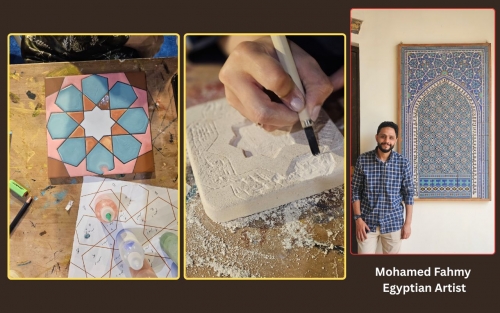
That discovery became the foundation of cuerda seca—the dry cord technique—which Egyptian artist Mohamed Fahmy brought to his Islamic Tile Techniques workshop at Youth City, Bahrain.
A design is drawn onto the tile, then every outline is traced with animal or plant fat mixed with manganese oxide. The greasy barrier stops liquid glazes from bleeding during firing. The grease then burns away, leaving clean, dark outlines between each colour.
The technique first appeared in medieval Andalusia before resurfacing across Persia and Tunisia. Today its distinctive lines decorate mosques and palaces across the Islamic world – kept sharp by nothing more than a temporary line of grease.
Related Posts