

Children Keep Al Heya Beya Alive
TDT | Manama
Email: mail@newsofbahrain.com
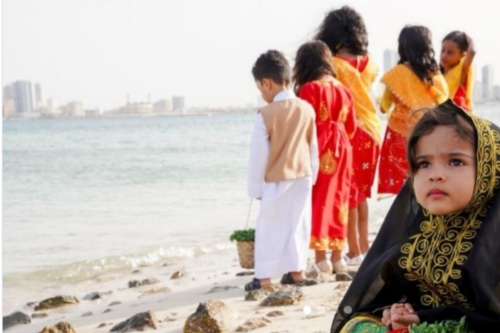
Bahraini children still carry ‘Al Heya Beya’ to the shore each Eid Al Adha, keeping alive a sea-facing custom in which small palm-frond baskets are grown at home, worn around the neck and then cast into the water on Arafat Day.
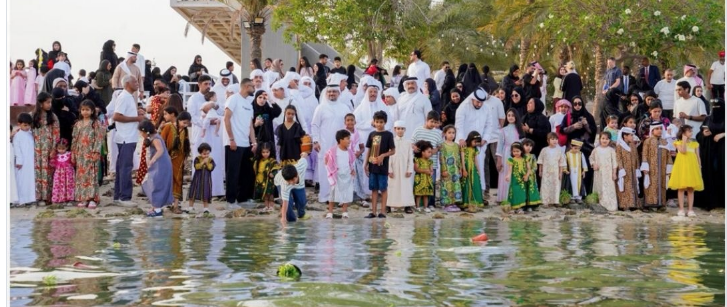
The rite, held by families and social centres across Bahrain, is among the best-known folk customs tied to the feast. It brings children, parents and neighbours together on the ninth day of Dhu Al Hijjah, with songs, old dress and a small act of farewell before Eid begins.
Girls wear the embroidered ‘bukhnaq’, worked with gold zari thread, while boys put on the thobe, waistcoat and ‘gahfiya’, the old head covering. The children then walk with their families to the nearest beach before sunset, the green ‘Heya’ hanging from their necks as they chant the words handed down through the years.
‘Al Heya Beya’ is a small palm-frond mat or basket planted with seeds such as wheat or barley. It is kept at home until the shoots grow, then taken to the sea on Arafat Day and thrown into the water. Families pray for a joyful Eid and for pilgrims to return safely from Makkah, often with gifts for the children.
The best-known chant runs: ‘Heya Beya… one Heya went and another came… on the road to Al Haniniya… we fed you, gave you lunch and threw you away… do not pray against me, forgive me, my Heya.’
The words differ from village to village. In some places, children sing lines about the pilgrim going to Makkah, visiting the holy sites and drinking from Zamzam, tying the custom more closely to Hajj and the hope of a safe return.
Some accounts say the name comes from ‘Al Hajji Beyei’, meaning ‘the pilgrim will come’, a phrase also known in Kuwait and the UAE after the Hajj season.
Bahraini researcher Mohammed Jamal said the custom had passed from parents and grandparents to their children and had lasted because families, cultural groups and heritage societies still treat it as part of Eid Al Adha.
He said the day gives children a family outing by the sea and teaches them to care for something of their own before giving it up.
On the shore, children show off their clothes and the small green baskets they have tended, then sing together before throwing them into the sea. For families watching, the scene remains one of the clearest old marks of Eid in Bahrain.
fsdfsdf
Related Posts