

Major Green Push
TDT | Manama
Email: mail@newsofbahrain.com
Mangrove forests, once a fading feature of Bahrain’s coastal landscape, are now re-emerging as a vital natural defence system, with more than 1.8 million trees planted across the Kingdom in a major environmental expansion drive.
Far from being a distant ecological goal, mangroves are increasingly treated as a living infrastructure that protects shorelines, supports marine biodiversity, and strengthens coastal communities.
Progress
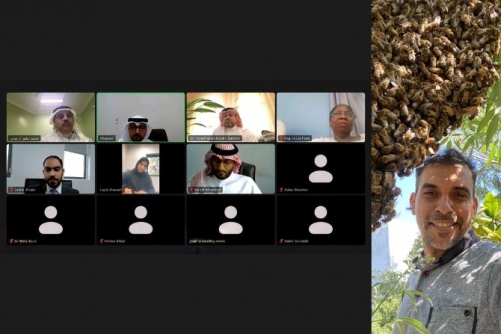
This progress was highlighted during the Services and Public Utilities Committee of the Capital Trustees Board’s 29th meeting, chaired by Engineer Mohammed Tawfiq Al Abbas and attended by Council Chairman Engineer Saleh Tarrada and senior officials.
Officials reviewed planting figures between 2022 and 2025, confirming that 1,811,336 mangrove trees have been planted nationwide.
The distribution shows significant regional variation: the Capital Governorate leads with 533,307 trees, followed by the Southern Governorate with 787,510, Muharraq Governorate with 470,424, and the Northern Governorate with 20,095.
Once limited in scope, mangrove planting is now developing into a structured ecological network that protects shorelines while restoring marine habitats closely tied to local livelihoods.
Historical Roots
Beekeeper Ali Al Mousawi, in an exclusive interview with The Daily Tribune, described mangroves as part of Bahrain’s ancient natural identity, with historical roots stretching back more than 2,000 years.
He linked their presence to the Dilmun civilisation and early records describing coastal tree systems believed to be mangroves.
Al Mousawi noted that mangroves once grew widely along shallow coastal areas, particularly in regions such as Tubli Bay, and said their current return represents restoration rather than expansion.
Expansion
Attention is now shifting toward 2026, with plans to further expand planting zones across the Capital Governorate. Officials stressed the importance of stronger coordination and structured implementation to ensure long-term environmental stability.
Al Mousawi emphasised that mangroves play a direct role in protecting coastal communities, reducing erosion, weakening wave impact, and creating safe breeding areas for fish stocks that support local livelihoods.
Beyond their coastal protection role, mangroves also act as powerful carbon sinks, absorbing significant amounts of carbon dioxide and storing it in coastal soils, which helps mitigate climate change and regulate local environmental conditions.
Mangrove Honey
One of the ecosystem’s most distinctive products is mangrove honey, which Al Mousawi described as darker, richer, and more intense in flavour due to its coastal origin.
However, he noted that its limited seasonal production makes it rare. Its availability depends directly on the health of mangrove ecosystems, creating both opportunity and vulnerability for beekeepers.
The committee emphasised that continued momentum is essential. Ongoing planting, coordination, and long-term planning will determine whether mangroves remain an expanding natural shield or risk losing strategic environmental progress.
Related Posts