

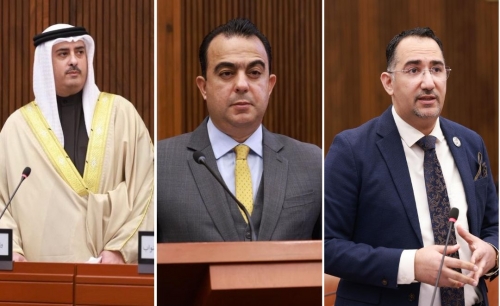
Shura Council passes law enabling Permanent Court of Arbitration to operate in Bahrain
TDT | Manama
Email: mail@newsofbahrain.com
The Shura Council yesterday passed a draft law ratifying a Host Country Agreement between the Government of the Kingdom of Bahrain and the Permanent Court of Arbitration, under Decree No. 39 of 2025, clearing the way for the court to hold arbitration, mediation and conciliation proceedings in Bahrain.
The council agreed to take the final view on the bill on an urgent basis and send it to the Speaker of the Council of Representatives to refer it to His Royal Highness Prince Salman bin Hamad Al Khalifa, the Crown Prince and Prime Minister, ahead of submission to His Majesty King Hamad bin Isa Al Khalifa.
Rapporteur Ali Al Aradi said the agreement showed a shared wish “to establish a headquarters for the Permanent Court of Arbitration in the Kingdom”, through which disputes would be handled “by arbitration or mediation or conciliation or commissions of inquiry”.
Text
He said the text also covers the privileges and immunities for those involved in the court’s work, including arbitrators and other participants in proceedings.
Justice Minister, His Excellency Nawaf Al Mawda, told members: “Bahrain is keen to diversify the arbitration centres it brings into the kingdom.”
He said the court deals with disputes between states and with state investment disputes, adding that it has “a big return for legal professionals and lawyers in Bahrain” through training and closer work on investment files.
The Minister said there would be coordination with the Bahrain Chamber for Dispute Resolution on how the work would begin, including training and payment arrangements, once the legal steps in Bahrain are completed.
Shura member Dr Hani Al Saati said ratification would make Bahrain “the first among the Gulf states to host the Permanent Court of Arbitration”, adding that this would strengthen trust in Bahrain’s legal setting while “not detracting from the sovereignty of the national judiciary”.
Under the agreement attached to the bill, Bahrain would recognise the court’s legal capacity, provide premises and secretariat support for hearings and meetings, and name contact points to handle coordination between the two sides.
The text also covers security arrangements for proceedings and steps to ease entry and stay for non-Bahrainis taking part, alongside rules for waiving immunities when they block the course of justice.
Related Posts