

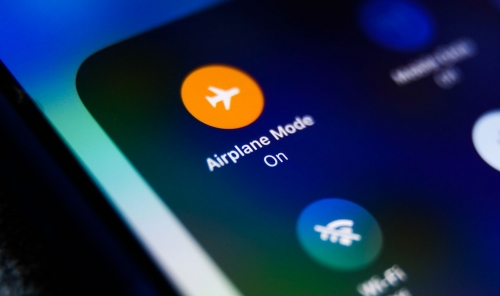
The Reason for Using Airplane Mode
When flight crews ask passengers to switch their phones to airplane mode before takeoff, it may seem like a routine instruction. However, the requirement is a precaution designed to limit wireless signals that could potentially interfere with aircraft systems.
A smartphone acts as both a transmitter and a receiver. When cellular service is active, it continually searches for nearby mobile networks and attempts to maintain a connection.
As an aircraft climbs and travels at high speed, the phone moves between different coverage areas and may repeatedly search for new cell towers. With many passengers using cellular connections simultaneously, this can create additional radio-frequency activity.
Reducing Potential Interference
Airplane mode disables the phone's cellular connection, preventing it from continuously transmitting and receiving signals through mobile networks.
Aviation authorities have established rules governing portable electronic devices because some wireless signals can potentially interfere with aircraft communication or navigation equipment. Such interference may not necessarily cause a major malfunction but could produce unwanted noise or static in communications.
For example, active phones can sometimes produce a buzzing sound in audio equipment, similar to the interference heard when a mobile phone is placed close to a speaker.
Keeping unnecessary wireless transmissions to a minimum is particularly important during critical stages of flight, including takeoff and landing, when pilots rely on clear communication and accurate aircraft systems.
Ground Networks
The issue is not limited to the aircraft itself. A mobile phone operating at high altitude can potentially transmit over a wider area than it would from the ground.
The U.S. Federal Communications Commission has noted that increased altitude can expand a phone's transmission range, potentially allowing it to interact with multiple ground-based cell sites.
With many phones operating simultaneously, disabling cellular connections can therefore help limit the impact on terrestrial mobile networks.
5G Network
The introduction of some 5G networks has brought additional attention to the relationship between wireless communications and aviation.
In particular, some 5G signals operating in the C-band have raised concerns about possible interference with aircraft radar altimeters. These instruments measure an aircraft's height above the ground and provide important information to pilots and aircraft safety systems, particularly during landing in poor visibility.
In the United States, regulators, airlines and telecommunications companies have taken measures to reduce potential interference, including using aircraft equipment designed to be more resistant to such signals.
Using Mobile Phones During a Flight
Airplane mode does not necessarily mean passengers must keep their phones completely disconnected throughout the flight.
If an aircraft provides Wi-Fi and the airline permits its use, passengers can generally switch Wi-Fi back on after enabling airplane mode. Bluetooth devices may also be permitted under the airline's instructions.
The exact rules vary by airline and aircraft, so passengers should always follow the instructions provided by the flight crew.
Related Posts