

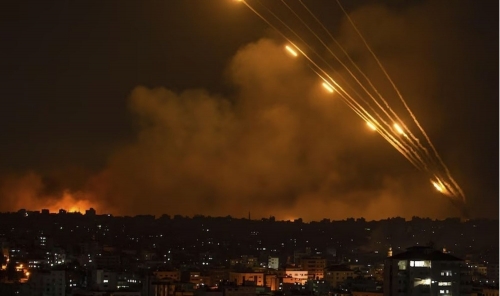
Iran Fires, Israel Intercepts — But the Threat Is Not Over
The Israeli military intercepted all missiles launched from Iran on Sunday, as the Middle East conflict reached one of its most dangerous flashpoints in months.
The Israel Defense Forces (IDF) confirmed its air defence systems successfully tracked and intercepted all incoming threats throughout the day, though it warned that additional waves of attacks had been detected as the situation developed.
Schools across Israel remained closed on Monday following a national security assessment by the Home Front Command, which placed the country under a restricted operational level. "No educational activities may be conducted," the command stated, as authorities kept restrictions on public activity in place.
Iran's military central command declared that Israel's strikes on Beirut's southern suburbs had "crossed all red lines." General Ali Abdollahi, head of the Khatam al-Anbiya command, demanded an immediate halt to Israeli operations in Lebanon and issued a stark warning of "more devastating and regrettable blows" should the conflict expand further.
The Lebanon Front: How Sunday's Spiral Began
The escalation had its roots in Beirut. Hezbollah confirmed it launched missiles and drones at two Israeli army barracks on Sunday morning. Israel responded by striking a militant command centre in Beirut's Dahiyeh district — killing 2 people and wounding 20, according to Lebanon's health ministry.
Iran had long warned that any new attack on Beirut would trigger a "full-scale resumption" of hostilities, and had insisted that any permanent peace deal must also end Israel's campaign against Hezbollah in Lebanon.
The attack drew sharp condemnation from Tehran's political leadership. Iran's parliament speaker and chief negotiator with Washington, Mohammad Bagher Ghalibaf, accused the United States of giving a "green light" for the Beirut strike — and went further, declaring that both US and Israeli assets were now "legitimate targets."
Related Posts