

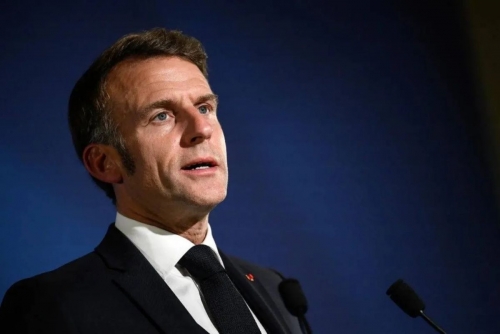
Macron urges caution on reparations as France confronts slavery legacy
Email: online@newsofbahrain.com
PARIS: Speaking at the Élysée Palace, French President Emmanuel Macron addressed the legacy of the transatlantic slave trade during a ceremony marking the 25th anniversary of France’s landmark 2001 law, which recognized slavery as a crime against humanity.
While acknowledging that the historical memory of enslavement remains a permanent project of national recognition, Macron firmly cautioned against making ‘false promises’ regarding financial reparations.
The president's cautious stance comes amid intensifying pressure from campaigners and lawmakers demanding that France establish a formal framework for reparatory justice.
Critics have expressed deep anger over France's recent decision to abstain from a United Nations vote that designated the transatlantic slave trade as the gravest crime against humanity and called for concrete reparations, a move local politicians labeled a historic and diplomatic mistake.
Demands for systemic repair remain particularly urgent in France's overseas departments and regions, including the Caribbean islands of Martinique and Guadeloupe, French Guiana, and the Indian Ocean islands of Réunion and Mayotte.
Local parliamentarians emphasise that stark structural inequalities across these territories including severe disparities in health, employment, environmental safety, and the cost of living, are the direct, ongoing legacies of colonial enslavement.
Historically responsible for trafficking approximately 13% of all enslaved African people across the Atlantic and Indian oceans, France is also facing multibillion-dollar reparation demands from Haiti.
This stems from a crushing financial penalty Paris imposed on the country in 1825 to compensate former slave owners following the Haitian revolution. To address the enduring global debate, Macron endorsed a parliamentary proposal to formally revoke the centuries-old colonial ‘Code Noir’ and announced a joint historical research initiative with Ghana.
Related Posts