

Middle East Conflict Disrupts Global Jet Fuel Supply, Europe Faces Shortages
Email: online@newsofbahrain.com
The recent escalation of conflict in the Middle East on 28 February 2026 has caused major disruptions to global energy flows, exposing critical vulnerabilities in jet fuel supply.
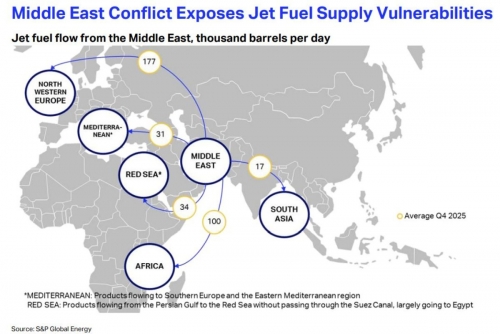
The Strait of Hormuz, a key maritime chokepoint carrying roughly 20% of the world’s oil, has become nearly impassable. Tanker traffic has dropped by 70–80%, creating immediate pressure on refined products like jet fuel, particularly for regions heavily reliant on Persian Gulf shipments.
Europe is among the most affected, with 25–30% of its jet fuel imported from the Gulf. The sudden reduction in shipping capacity, combined with skyrocketing insurance premiums, has tightened availability and driven jet fuel prices sharply higher amid fears of physical shortages.
Potential alternative suppliers such as India and China face their own limitations, as 84% of crude passing through the Strait is already destined for Asian markets. Long rerouting via the Cape of Good Hope and increased war-risk premiums are further increasing costs and delaying deliveries.
The crisis highlights the urgent need for greater resilience in jet fuel supply. Experts call for dedicated strategic reserves, diversified sourcing, and stronger coordination between governments, airlines, and refiners. The aviation sector, which cannot easily substitute jet fuel, is at the forefront of the disruption, making policy intervention critical.
In the longer term, accelerating the development of sustainable aviation fuels and reinforcing supply chain redundancy will be essential to mitigate future shocks.
Related Posts