

Surplus Hotel Food Feeds 5,000 Families Daily
Within 90 minutes of being packed, surplus food from ghabgas and hotels is on its way to struggling households, amounting to around 5,000 meals a day during Ramadan alone.
The Bahrain Food Bank says the food is collected, checked and redistributed on the same day, with no storage or refrigeration once it leaves an event.
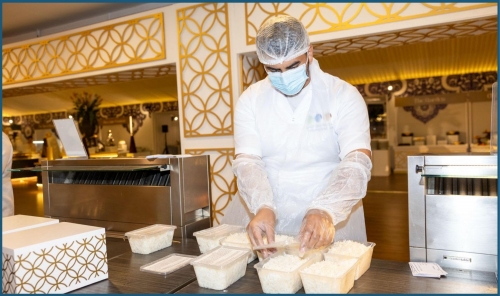
Waleed Ali, Operations Manager of the charity, told The Daily Tribune surplus food from ghabgas, weddings, hotels and large gatherings is packed on site under strict health and safety procedures, then delivered immediately to beneficiaries.
‘We pack the food properly and follow all health and safety measures so it reaches the beneficiary in the best condition,’ he said. ‘As soon as we finish packing, the driver leaves straight away. We do not store the food or keep it in fridges. It goes out first-hand and arrives fresh.’
The organisation currently supports between 4,000 and 5,000 Bahraini families, in addition to around 1,800 expatriate workers. Priority is given to struggling families, with remaining meals distributed to workers.
During Ramadan, daily collections range between 5,000 and 6,000 meals, depending on the scale of events. On ordinary days the numbers vary, but large ghabgas and hotel functions increase the volume.
Ali said food is collected only after checks are carried out, including temperature testing to ensure it is safe for consumption. Items that fail to meet standards are rejected.
‘We do not take any food unless we are fully satisfied it is suitable,’ he said. ‘Our aim is to deliver it as if it were freshly ordered, not simply repacked.’
Packing can take between one hour and 90 minutes, depending on the size of the event. Once complete, distribution begins at once to families and workers across the country.
The charity employs nine field staff and draws on a volunteer team of between 15 and 30 people when demand rises. Volunteers are called in for large-scale ghabgas or hotel collections.
‘We have around 30 volunteers in total, and when the workload is heavy we contact them,’ Ali said. ‘They have never fallen short. We assign them according to need, whether at hotels or events.’
The Bahrain Food Bank has formal agreements with around 25 hotels and is seeking to expand partnerships further. It also works with restaurants, catering companies and shopping complexes that generate surplus food throughout the year.
Ali said awareness has grown in recent years, with more event organisers contacting the charity in advance. He urged hosts to coordinate before major gatherings, particularly at weekends when demand peaks.
‘If someone is planning a wedding or a large event, they often order for 400 guests when 200 attend. The food increases,’ he said. ‘We ask them to contact us early, even a day, a week or a few hours beforehand, so we can arrange collection properly.’
Asked about surplus levels one week into Ramadan, Ali said quantities differ from one hotel or event to another, but excess remains common.
‘Today from one event alone we might collect 300 meals,’ he said. ‘It changes from place to place, but there is always surplus.’
He added that the charity hopes more hotels and restaurants will join its network so edible food reaches those who need it instead of being discarded.
Related Posts