

Shura Passes Urgent External Auditors Law Changes
An urgent government-drafted amendment to Bahrain’s external auditors law was passed by the Shura Council on Sunday, replacing the ‘Disciplinary Board’ with an ‘Auditors Accountability Board’ and widening the penalties that can be used against auditors and audit offices.
The bill amends parts of Decree-Law No. 15 of 2021 on external auditors, issued alongside Decree No. 76 of 2025. After debate on the Financial and Economic Affairs Committee report, the Council voted in favour and sent the bill to the Speaker of the Council of Representatives to pass it on to the Prime Minister, ahead of it being raised to His Majesty the King.
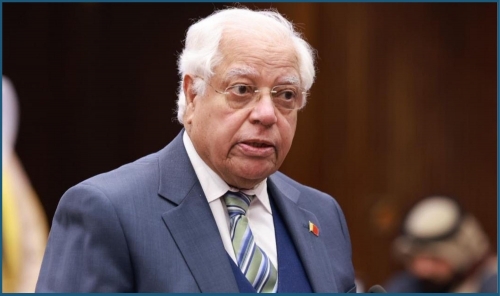
Committee rapporteur Hisham Al Qassab said the change was meant to update the rules for the profession and strengthen trust in audit work. ‘Updating this framework will help cement trust in audit reports, with the professional certification and five years of experience required for registration as a practising auditor,’ he told the chamber.
He said the bill also raises the bar for auditors recruited from outside Bahrain. ‘The draft law added organisational controls that reinforce the principle of competence,’ he said, pointing to requirements that an auditor’s right to practise remains valid in their home country and that they have at least five years of continuous practical experience after gaining a professional qualification.
Shura member Fouad Al Hajji said the bill should be seen as a change in how the profession is run. ‘The amendments in the external auditors bill cannot be seen as a mere legislative update; they are an important regulatory shift in a profession tied directly to market trust and the national economy,’ he said. He also pointed to the new range of sanctions. ‘The idea is not to be harsh, but to move from formal liability to real professional responsibility,’ he said.
Dr Mohammed Al Khazaie, another Shura member, said external auditing was central to confidence in firms’ accounts. ‘External auditors are of great importance to companies and institutions and to owners and shareholders, because of their role in supporting economic life,’ he said.
The bill also sets out what auditors must cover in an audited financial report and what should be handled separately. It removes from auditors an obligation to check and include in the audited report the audited entity’s application of governance systems and anti-money laundering and counter-terrorist financing requirements and other international obligations, on the basis that these duties sit with the company under related laws and should be covered in a separate report.
At the same time, the bill keeps auditors and audit offices required to follow anti-money laundering and counter-terrorist financing rules and procedures, including ministerial decisions, Decree-Law No. 4 of 2001 on combating money laundering and terrorist financing, and the rules issued by the Central Bank.
The Auditors Accountability Board would be formed by ministerial decision every three years, chaired by a judge from the High Civil Court. Its members would include another judge nominated by the Supreme Judicial Council, a ministry employee and two professional specialists.
The Ministry of Industry and Commerce said the amendment is based on Article 87 of the Constitution, citing urgent need and warning that delays in updating audit oversight could affect Bahrain’s standing and its international obligations. The ministry said the changes sit alongside work on corporate governance and transparency, and steps against money laundering and terrorist financing.
The sanctions available under the law would still include written warnings, fines of up to BD100,000 and the option of cancelling a licence, but the bill adds further measures. These include ordering training or educational programmes for up to three years in cases tied to poor audit quality, placing conditions on a licence for up to one year, barring an auditor from working on certain types of entities for up to one year, and stopping the renewal of an auditor’s appointment to clients, in full or in part, for up to three years.
Related Posts