

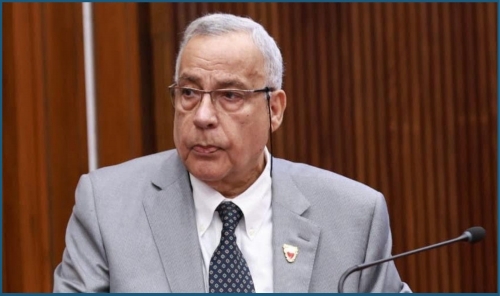
Shura Council Votes Down Age-Based Shorter Hours Plan
A unanimous nay from the Shura Council on Sunday rejected, in principle, draft changes to the Civil Service Law that would have reduced daily working hours and increased annual leave for government employees aged 50 and above, with the bill returned to Parliament for reconsideration.
The draft, built on a proposal from Parliament, sought to amend Decree-Law No. 48 of 2010 by cutting the official working day on an age scale and adding extra leave. Under the proposal, employees who had reached 50 would have worked one hour less each day and received 35 working days of annual leave. Those aged 55 would have seen a two-hour daily reduction and 40 days’ leave. Those aged 60 would have worked three hours less and received 45 working days of annual leave.
The Legislative and Legal Affairs Committee recommended that members refuse the measure, saying it did not fit with the rules governing public service work, and warning of effects on staffing, service delivery and the state budget.
Presenting the committee’s findings, rapporteur Dr Ahmed Al Arrayed said the proposal ‘creates discrimination between employees on the basis of age, even where their legal positions are the same’. He said it would also move detailed rules on attendance, departure times and annual leave into primary legislation, rather than leaving such matters to the executive regulations, decisions and instructions used to run the system.
He also warned that it would widen the gap with private-sector rules. The measure, he said, ‘creates a core inconsistency between the Civil Service Law and the Private Sector Labour Law, producing unequal benefits between government and private-sector employees’. He added that Bahrain’s legal benchmark for older persons entitled to special care uses the age of 60, not 50.
Al Arrayed said the draft would confer benefits by age alone. ‘Employment advantages are built on competence,’ he said, ‘yet an employee could gain the privileges created by this draft purely by reaching a certain age, without meeting any competence requirement’.
The committee report refers to constitutional language that treats public employment as a national service, and links the job to discipline, punctuality and integrity. It argues that time at work is part of the duty owed to the public and that equal treatment between employees depends on unified rules, rather than exceptions based on age.
A central point in the report is that the Civil Service Law is built around job grade and the nature of work, not age. It says the draft would treat employees differently even when they hold the same grade and carry the same duties. The committee also said that writing attendance and leave detail into the law would reduce flexibility, whereas executive regulations and instructions can be adjusted more readily to meet the needs of government bodies.
The report also points to differences between the public and private sectors. Both the Civil Service Law and the Private Sector Labour Law apply the same base rule for annual leave of 30 days a year, but the draft would have raised that for older government employees only. It adds that both systems allow working hours to be fixed with the needs of the service in mind, yet the draft would have locked in age-based reductions without that test.
The report cites evidence from the Civil Service Bureau, which told members it could not implement the plan without harming operational requirements and causing disruption across government bodies. The bureau said it already issues rules on working days and hours, including flexible work arrangements that allow employees to choose a start time within a defined limit of up to three hours. It also pointed to Decision No. 1 of 2023, introduced to standardise attendance and departure rules across government entities.
Workforce figures were also cited. The bureau estimated about 6,575 employees would fall within the age bracket covered by the draft, around 16 per cent of the workforce. It said 57 per cent of them work in education and training, 26 per cent in services and 17 per cent in health. The committee noted that many education staff already take leave linked to the school year, limiting how evenly the proposed change would have applied.
With the Shura Council’s unanimous vote to reject the draft in principle, the bill has been returned to Parliament for review.
Related Posts