

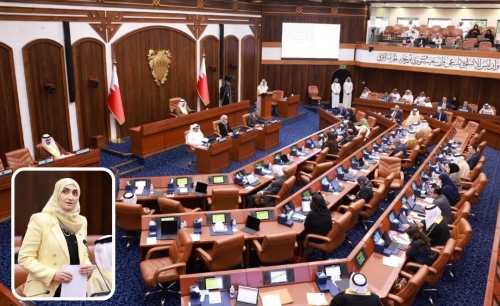
Shura Panel Rejects Plan for Fixed Work Permit Cap
TDT | Manama
Email: mail@newsofbahrain.com
Plans to make Bahrain’s labour market authorities fix a national ceiling on work permits for foreign workers face a hurdle in the Shura Council, after its Services Committee urged members to reject a draft amendment to the Labour Market Regulation Law when it comes up for debate on Sunday.
The draft, based on a law proposal already passed by Parliament, would amend Article 4 of Law No. 19 of 2006 so that the national labour market plan must include a maximum number of work permits the Labour Market Regulatory Authority (LMRA) can issue within a set period. The wording in force says the plan may include such a ceiling. The Services Committee, backed by the Labour Market Regulatory Authority, the Ministry of Labour and the government’s legal advisers, has recommended that the Shura Council should not agree in principle to this change.
The amendment keeps the structure of Article 4 but tightens one sentence. The national labour market plan, drawn up by the Labour Ministry in coordination with the LMRA and approved by the Cabinet every four years, would be required to fix an upper limit on the total number of work permits issued, either across all sectors or by occupation or economic activity. The Legislative and Legal Affairs Committee in the Shura Council has confirmed that the draft is sound in constitutional and legal terms.
In its report, the Services Committee says the current law was written in a way that allows the LMRA to respond to economic shifts and emergency events without having to wait for amendments to pass through the legislature. The national plan runs for four years. If a compulsory ceiling is set at the start of each period and left in place until the end, the committee argues, the labour market may be left with numbers that no longer match actual demand if new needs arise in key sectors halfway through.
The committee also questions how far the proposed wording would reduce the volume of permits in practice. It says public bodies asked to set a ceiling for a four-year plan are likely to choose a high figure that covers as many future scenarios as possible, which would leave the legal change as a formality while the limit itself remains broad enough to absorb both expected and unexpected demand.
Another point raised is that work permits are not all used to bring in new workers from abroad. A large share relates to foreign workers already living in Bahrain who move from one employer to another as demand shifts. A single compulsory ceiling on total permits, the report notes, could limit this movement, reduce room for adjustment in the market and place extra pressure on businesses, without directly shrinking the foreign workforce.
On the question of job opportunities for citizens, the Services Committee argues that progress depends on training, qualifications and wage support rather than simply cutting numbers of permits. It says the employment of Bahrainis rests on preparing people for the skills employers seek in an open market and on continuous training and incentives delivered through government programmes, rather than on a numerical cap alone.
The report also warns that a hard national ceiling might restrict Bahraini employers who wish to expand their projects. Work permits are issued in response to applications from local companies that need more hands to carry out contracts or grow their activities. If a fixed limit on permits is imposed and reached, the committee says, employers could find themselves unable to secure workers for expansion plans, with knock-on effects for production and for efforts to attract new investment.
Equal treatment between firms is another concern. Under the current system, ceilings are set for each establishment based on its own conditions and needs. The draft law would instead introduce a single overall cap for all sectors and activities. The report suggests this approach could favour firms that apply early and secure permits while they are still available, leaving others that apply later without access once the national ceiling has been used up.
The committee adds that a strict ceiling could have unintended side-effects. If an employer cannot recruit a specialist foreign worker because the limit has been reached and there is no suitably trained Bahraini for the job, some companies may look for ways around the formal system and resort to irregular arrangements. A shortage of permits would also push up the cost of labour and raise production expenses, which in turn would place an extra strain on enterprises.
In its written opinion, the Labour Market Regulatory Authority supports the government’s call to revisit the draft. It says the Labour Market Regulation Law is built on flexible general rules, with the detailed choices left to executive decisions so that policy can be adjusted in line with supply and demand. The authority warns that turning an optional provision into an obligation could encourage irregular hiring and says wider and more adaptable measures are needed instead of narrow amendments that add extra restrictions.
The Ministry of Labour takes a similar view. It says the idea of a fixed national ceiling for work permits is a statistical method that suits countries which deal with large inflows of migrant workers, while Bahrain bases its approach on the actual needs for foreign labour to keep the labour market in balance. The ministry adds that Bahrain’s direction is to make fuller use of local workers, give Bahraini citizens an advantage through training and qualification, and coordinate between government bodies to open jobs for them, and that there is no clear economic gain from imposing a ceiling on permits.
After reviewing these views and its own discussions, the Services Committee concludes that the current framework of Article 4 should remain in place and that the focus should be on training, qualification and government programmes that prepare Bahrainis to compete for posts. It therefore recommends that the Shura Council should reject in principle the draft amendment when it comes up for debate. Parliament has already voted in favour of the draft, and the matter now returns to the upper chamber for a decision.
Related Posts