

Bahrain imports 90% of food, ranks 38th on Global Food Security Index
Ninety per cent of Bahrain’s food is imported, yet the kingdom ranks 38th out of 113 countries on the Global Food Security Index (GFSI).
Bassem Al Saei, chairman of Ghitha Bahrain Holding, suggested that Bahrain would benefit from a dedicated state body to oversee supply, quality, and inspection across the food chain—similar to the National Health Regulatory Authority (NHRA).
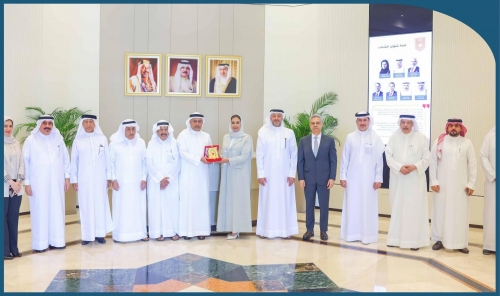
He made the remarks during a panel on food security and water resources organized by the Shura Council’s General Secretariat in collaboration with the Bahrain Institute for Political Development.
Al Saei noted that Ghitha collaborates with private firms to accelerate and expand efforts that strengthen national food security and tackle related challenges. The company connects key national assets to build an integrated, sustainable food system, including Bahrain Flour Mills Company, the General Poultry Company, Delmon Poultry Company, and the Bahrain Agricultural Development Company.
New Investment
The focus is on sub-sectors requiring expansion and new investment, while integrating the various components of the food system.
Bahrain Flour Mills Company is planning a strategic expansion in the Logistics Zone under a land lease agreement with the Ministry of Transportation and Telecommunications. The project aims to increase wheat storage capacity to cover six months, with completion expected in four to five years.
Local Demand
The General Poultry Company currently meets about 44 per cent of local demand, with a second expansion planned to raise this to 70 per cent. Delmon Poultry Company supplies roughly 18–20 per cent of local demand, with room for growth.
Ghitha’s strategy focuses on diversifying production sources, supporting food security policies, investing in promising sectors, creating jobs, adopting modern technology, boosting food processing, and exploring new markets. The company also plans to enter complementary lines, enhance distribution, and unify branding under one umbrella.
Key Pillars
Al Saei outlined five pillars of food security: grains, animal and plant protein, dairy, fruit and vegetables, and fats and oils. He noted that fruit and vegetable production is particularly challenging due to import competition, seasonal price fluctuations, limited farmland and water resources, and changing temperatures.
He emphasized that national efforts prioritize sectors that strengthen domestic food security, with the private sector playing a critical role in ensuring consistent supply.
Legal Protection
Al Saei also highlighted the importance of legally protecting water resources as part of long-term development plans, sharing data on Bahrain’s agricultural, water, and livestock resources.
The panel is part of a series organized by the Shura Council’s General Secretariat and the Bahrain Institute for Political Development to support members’ legislative and oversight work and to enhance understanding in related fields.
Related Posts