

How Bahrain helped map the $2.9Bn bust
TDT | Manama
Email : editor@newsofbahrain.com
Months of secret planning exposed traffickers’ routes and dismantled their networks
The Kingdom of Bahrain stood shoulder to shoulder with global partners in a dramatic operation that unfolded like a screenplay. Months of secrecy, layers of intelligence and a sudden strike cut through the world’s drug networks.
Strategic build-up
Behind the headlines lay weeks of tense preparation. Intelligence officers from the International Security Alliance, working with Europol and Ameripol, pieced together fragments of information from across borders. Smuggling routes were traced, traffickers’ methods were decoded and emerging criminal networks were silently mapped. By the time the curtain lifted between June 10 and August 7, every detail was in place for a coordinated strike.
Coordinated strike
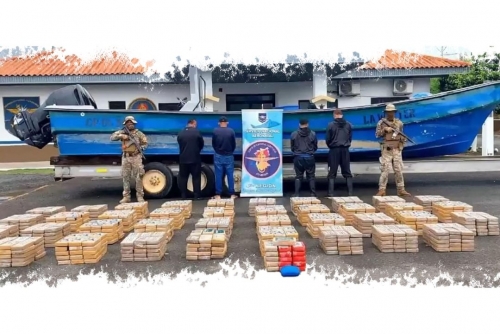
When the operation moved, it moved fast. Across four continents, 25 countries acted in unison. By the end, more than 822 tons of narcotic and psychotropic substances valued at over 2.9 billion dollars had been seized. A staggering 12,564 suspects were arrested and drug cartels found their lifelines abruptly severed. Officials said the operation’s true strength was not only in the numbers but in how it dismantled the income streams that kept the gangs alive.
Bahrain’s voice
His Excellency General Shaikh Rashid bin Abdullah Al Khalifa, Minister of Interior, praised the outcome, describing it as proof that unified strategy and expertise exchange can deliver lasting security. H.E. also expressed gratitude to the UAE for its initiative in founding the alliance and for hosting its General Secretariat in Abu Dhabi, crediting its role in strengthening both regional and international stability.
Global effort
The operation drew together countries as diverse as France, Spain, the Netherlands, Slovakia, Italy, Morocco, Argentina, Brazil, Chile, Colombia, Ecuador, Paraguay, Bolivia, El Salvador, Guatemala, Panama, Venezuela, Peru, Croatia, Belgium, the Maldives, Jordan, Nepal, the UAE and Bahrain. Each brought its own expertise, creating a network strong enough to match the cartels it was designed to defeat. High Highness Sheikh Zayed bin Hamad bin Hamdan Al Nahyan, Chairman of the UAE National Anti-Narcotics Authority, stressed the importance of advanced policies, technology and trained personnel in sustaining the fight. Slovakia’s Interior Minister Matus Sutaj Estok underlined the global scale of the drug challenge, while Ameripol’s General Secretariat said the alliance had shown why joint strategies are indispensable.
Alliance mission
Formed in 2017, the International Security Alliance now unites 11 member states against threats ranging from narcotics and money laundering to cybercrime, human trafficking and crimes against children. Its latest operation proved that intelligence-led planning, shared resources and multinational coordination can deliver results that no nation could hope to achieve alone.
Related Posts