

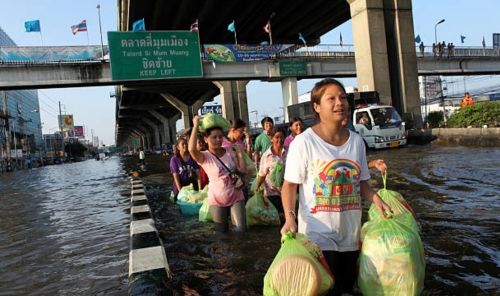
Bangkok Begins Recovery After Major Flooding
Thailand has entered a recovery phase after days of heavy rain and widespread flooding, with water levels beginning to fall in Bangkok while authorities continue drainage and relief operations.
The flooding has affected more than 2.6 million people across 29 provinces and Bangkok, with the national death toll reaching 23 since September 16, according to Thailand’s Department of Disaster Prevention and Mitigation.
Emergency funding approved
The Thai government has approved approximately 4.1 billion baht ($122 million) in emergency funding to support people affected by the floods.
The funds are expected to be distributed through the Interior Ministry as authorities continue assessing damage and providing assistance to affected communities.
Bangkok works to clear roads
Rainfall has eased in Bangkok, allowing authorities to accelerate drainage operations. Bangkok Governor Chadchart Sittipunt said he expects around 90% of the capital’s main roads to be dry and open to normal traffic within two days, although the timeline depends on local water levels and conditions.
Some low-lying communities remain flooded, while pumping operations continue and authorities work to lower water levels in major canals.
The flooding has also disrupted transport and business activity across the capital.
Airport disruption continues
The effects of the flooding have reached Bangkok’s Suvarnabhumi Airport, where around 5,000 pieces of Thai Airways baggage remained stranded on Tuesday.
Thai Airways Chief Executive Chai Eamsiri said the airline expects to clear the backlog within 72 hours. The airline has also deployed additional personnel to help with ground operations following disruption caused by heavy rain and flooding.
New flooding risk from high tides
Despite improving conditions in Bangkok, authorities are warning of another potential risk.
A high-tide warning is in effect from September 29 to October 4 for Bangkok and seven other provinces. Officials say the combination of high tides, water flowing downstream and the continuing monsoon could raise river levels.
Communities along the Chao Phraya, Tha Chin, Mae Klong and Bang Pakong rivers are particularly vulnerable, especially areas without permanent flood defences.
Residents in low-lying areas have been advised to monitor water levels, move belongings to higher ground where necessary and prepare for possible disruption to travel.
What happens next?
Authorities are now balancing recovery with the risk of further flooding.
While Bangkok is expected to see improving conditions and the reopening of major roads, some low-lying areas may take longer to dry. Elsewhere in Thailand, flooding continues to affect dozens of provinces.
The immediate priorities are clearing floodwater, restoring transport and essential services, providing financial assistance to affected residents and monitoring rivers and reservoirs as high tides approach.
For many communities, the crisis is therefore shifting from emergency response to recovery and damage assessment, even as authorities remain alert to the possibility of additional flooding.
Related Posts