

Can Dogs Smell Cancer? AI Puts Their Noses to the Test in India
Email: online@newsofbahrain.com
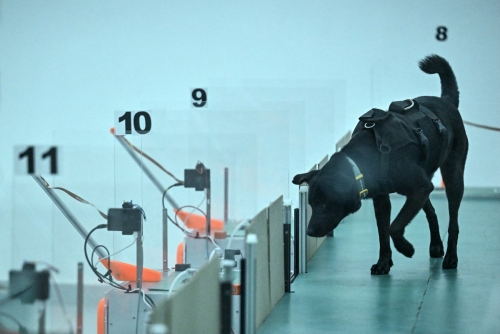
Bengaluru: A Bengaluru-based startup combines trained dog's remarkable sense of smell with artificial intelligence in an experiment to develop a non-invasive means of diagnosing cancer from human breath.
The startup, Dognosis, is training dogs such as Chloe, a Labrador mix, to identify chemical signatures associated with cancer. The dogs wear 3D-printed helmets and harnesses with sensors that record their brain activity, breathing, and body language responses while they sniff samples. AI transforms those reactions into quantitative data.
The technique is based on research indicating that diseases might alter the volatile molecules generated by the human body, resulting in different scents that dogs may be able to identify. Dogs have an estimated 300 million scent receptors, compared to approximately five million in humans.
The testing procedure is intended to be quite straightforward. A person breathes into a cotton mask for approximately 10 minutes before sealing the sample and transporting it to a laboratory. The dogs analyse the samples without making physical touch with the patients.
Dognosis has published findings from a research involving over 1,500 people from six hospitals in Karnataka. The company claimed that its approach achieved more than 90% accuracy across seven major forms of cancer. The results were published in the Journal of Clinical Oncology.
They now intends to test the technology in real-world scenarios as it works toward regulatory and commercial certification. Dognosis intends to commercialise their breath-based screening system in 2027.
However, cancer specialists urge caution. Oncologists who were not engaged in the experiment described the findings as interesting, but noted that far larger trials are required before the technology can be deemed a viable diagnostic tool for patients.
If successful, experts believe dog-assisted screening could eventually provide a low-cost, non-invasive initial layer of cancer screening, especially in areas where access to conventional diagnostic procedures is limited. However, the technique is still experimental and should not be used in place of established cancer screening or detection methods.
Related Posts