

DCO Approves Eight New Members
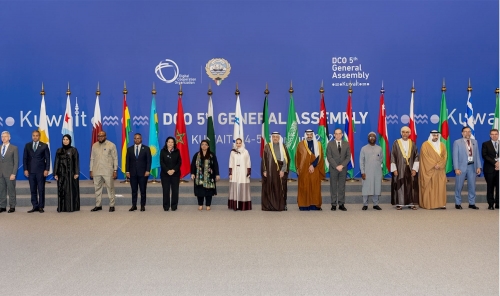
The Digital Cooperation Organization (DCO) has approved the candidatures of eight countries to join the organization as Member States, in a major expansion that could increase its membership from 16 to 24 countries and give it a combined population reach of approximately 980 million.
The DCO Council approved the candidatures of Albania, Azerbaijan, Kazakhstan, Kenya, Lebanon, Palestine, Syria and Zambia during its latest meeting in Riyadh, Saudi Arabia, on August 28.
The organization also announced that Tajikistan is set to join as an Associate Member, creating new opportunities for the country to strengthen digital cooperation and participate in public-private partnerships focused on digital innovation, skills and inclusion.
DCO Secretary-General Deemah AlYahya said the expansion demonstrated that the organization’s model of international cooperation around the digital economy had gained confidence since its establishment in 2020.
“When the DCO was launched by five countries in 2020, a standalone organization built around the digital economy outside the traditional blocs, it was an untested proposition. The news today of our expansion makes it a proven fact,” AlYahya said.
She said countries were joining as decisions concerning data, artificial intelligence and cross-border trade were being shaped, making participation in international digital cooperation increasingly important.
The proposed accessions would significantly broaden the DCO’s geographical footprint, extending its presence for the first time into Central Asia through Kazakhstan and strengthening its reach across the Caucasus and Western Balkans through Azerbaijan and Albania.
According to the DCO, the expanded membership would represent approximately 12 percent of the global population, increasing the organization’s role in shaping international approaches to the digital economy.
The approval of the eight countries’ candidatures marks the beginning of the formal accession process. Their membership will take effect after each country completes its respective national internal procedures and deposits its instrument of accession in accordance with the DCO’s founding documents.
The organization is currently implementing its 2025-2028 four-year agenda, with a focus on digital policy development, digital public infrastructure, artificial intelligence governance, digital skills, startup ecosystems, cross-border data flows and digital economy measurement.
The DCO said its expanded cooperation would continue to involve governments, the private sector, international organizations, academia and civil society, with the aim of turning digital development plans into measurable outcomes.
Founded in 2020, the DCO describes itself as the world’s first standalone international intergovernmental organization dedicated to accelerating inclusive and sustainable growth of the digital economy. Its existing 16 Member States represent nearly USD 3.5 trillion in GDP and a combined population of more than 800 million people.
Related Posts