

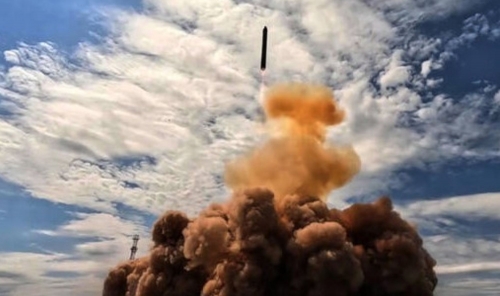
Russia Tests Long-Range Missile After Expiry of Key US Nuclear Treaty
Russia has carried out a test of a long-range missile following the expiration of the New START nuclear arms treaty with the United States, marking a new phase in growing tensions between Moscow and Washington.
Russian officials said the missile launch was aimed at demonstrating the country’s strategic military readiness and maintaining the effectiveness of its nuclear deterrence systems amid worsening global security conditions.
The test involved the Sarmat intercontinental ballistic missile, one of Russia’s newest long-range nuclear-capable weapons. The missile is designed to carry multiple warheads and strike targets across vast distances, making it a central part of Russia’s modern nuclear arsenal.
The launch came shortly after the expiration of the New START treaty — the last remaining major nuclear arms control agreement between Russia and the United States. The treaty had placed limits on the number of deployed strategic nuclear warheads and delivery systems held by both countries.
Russian authorities said the missile successfully reached its designated target during the test and described the operation as part of ongoing efforts to strengthen national defence capabilities.
The development has raised fresh concerns internationally over the future of global nuclear arms control and the increasing risk of a renewed arms race between major powers.
Relations between Moscow and Washington have remained deeply strained over security issues, military conflicts, sanctions, and disagreements surrounding NATO and European security.
Security analysts warn that the absence of binding arms-control agreements could lead both countries to expand and modernise their nuclear arsenals without the restrictions that existed under previous treaties.
The Sarmat missile, sometimes referred to in Russian media as “Satan II,” is capable of travelling thousands of kilometres and is intended to replace older Soviet-era missile systems.
Western governments have closely monitored Russia’s strategic weapons programmes, while international observers continue urging both Moscow and Washington to resume dialogue on nuclear stability and arms control.
Related Posts