

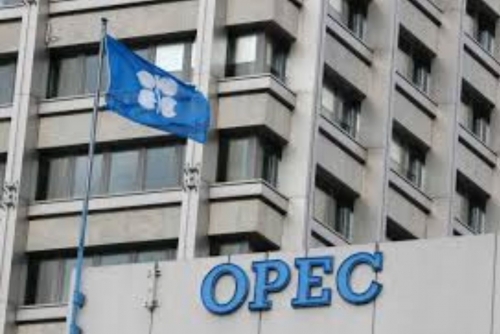
UAE to Exit OPEC After More Than 50 Years
Email: online@newsofbahrain.com
The United Arab Emirates has announced it will withdraw from the Organization of the Petroleum Exporting Countries (OPEC) after more than five decades of membership, in a move reflecting a strategic shift in its energy policy.
The decision will take effect on May 1, according to a statement carried by the state news agency, released as OPEC prepared to meet in Vienna on Wednesday. The UAE will also exit the broader OPEC+ alliance.
The statement said the move followed “a comprehensive review” of the country’s production strategy and future capacity, and was driven by national interest.
“While near-term volatility, including disruptions in the Arabian Gulf and the Strait of Hormuz, continues to affect supply dynamics, underlying trends point to sustained growth in global energy demand over the medium to long term,” report said.
It added that the decision reflects a “policy-driven evolution” aimed at enhancing flexibility in responding to market conditions, while maintaining a commitment to stability.
The UAE, a founding member of OPEC since 1967, has been a key player in global oil markets alongside major Gulf producers such as Saudi Arabia and Kuwait.
Its departure comes as the country accelerates economic diversification, with non-oil sectors now contributing around 75 percent of gross domestic product. At the same time, Abu Dhabi has signaled plans to boost oil production capacity from about 3.4 million barrels per day to five million by 2027.
The UAE expressed appreciation for OPEC and its allies, noting its “significant contributions and sacrifices” during its membership, but said it would now focus on priorities aligned with its national interests and global energy commitments.
The announcement also comes amid heightened volatility in oil markets. A recent conflict involving Iran led to a sharp drop in OPEC output, with production falling by 7.88 million barrels per day in March — the steepest decline in decades. Total output dropped 27 percent to 20.79 million barrels per day, exceeding cuts seen during the Covid-19 pandemic, the 1970s oil crisis, and the 1991 Gulf War.
The UAE’s exit follows Qatar’s departure from OPEC in 2019, while other Gulf producers such as Bahrain and Oman remain outside the group but cooperate with its supply management framework.
Related Posts