

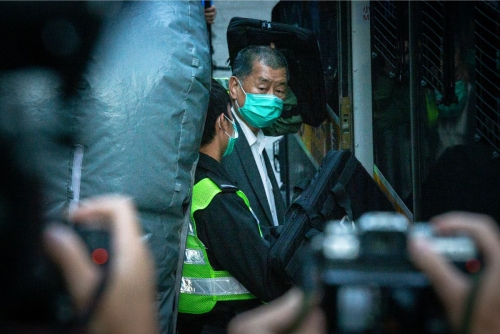
Jimmy Lai Given 20-Year Prison Term in High-Profile National Security Case
Email: online@newsofbahrain.com
Hong Kong: A court in Hong Kong has imposed a lengthy 20-year prison sentence on Jimmy Lai, the 78-year-old founder of the now-closed Apple Daily newspaper and a leading voice in the city’s pro-democracy movement. The ruling marks one of the most significant applications of Hong Kong’s controversial national security law since its enactment in 2020.
Lai’s sentence was delivered on Monday after his conviction in December on two counts of conspiracy to collude with foreign forces and one count of publishing seditious materials, offences under the national security framework imposed by Beijing.
Judges sitting in the High Court described Lai’s actions as serious breaches of national security provisions. Although the law allows life imprisonment, the court set the term at two decades far longer than most other sentences for similar charges to date.
Lai has already spent years in detention while legal proceedings unfolded, including time in solitary confinement. He has repeatedly denied wrongdoing, asserting that his journalism and advocacy were peaceful expressions of free speech. Critics say the prosecution and sentence are politically driven and reflect a sharp erosion of civil liberties in the former British colony.
Lai’s health has been a central concern for his supporters. At 78, he suffers from ailments that his family and rights groups fear could worsen in custody, with some warning that the sentence could amount to a life term given his age.
Alongside Lai, several of his former Apple Daily colleagues and pro-democracy activists were also sentenced on Monday to prison terms ranging from six to ten years for related offences.
International reactions were swift. Western governments and press freedom advocates condemned the sentence as severe and detrimental to independent journalism in Hong Kong. Hong Kong authorities maintain that the case was handled according to the law and deny it targeted freedom of the press. Still, the ruling is widely seen as a defining moment in the city’s transition from a global financial hub with broad liberties to a jurisdiction tightly policed under national security provisions.
Related Posts