

Two Years After October 7: How One Day Redefined the Middle East
ashen@newsofbahrain.com
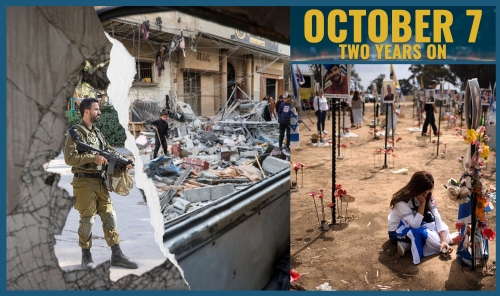
Two years have passed since the morning of October 7, 2023 — a day that set off a chain of events reshaping the political and security landscape of the Middle East.
At the time, the region appeared poised for historic transformation. Saudi Arabia was on the verge of normalizing ties with Israel, following a diplomatic thaw with Iran. Optimism was rising that reconciliation between the region’s two key powers could usher in peace in conflict zones such as Yemen and Lebanon.
Those hopes were shattered when Hamas launched a deadly assault in southern Israel, killing 1,195 people and taking 251 hostages. The unprecedented attack struck at the core of Israel’s national psyche, reviving painful memories of past terror and setting off a relentless cycle of violence.
In the two years since, Israel has expanded military operations far beyond Gaza, conducting strikes across Lebanon, Syria, and Yemen — resulting in thousands of deaths, mass displacement, and deep regional divisions.
Escalation Across Borders
In Lebanon, Israeli air raids on Beirut and southern areas have killed more than 3,100 people, including senior Hezbollah figures such as Hassan Nasrallah. Israeli forces advanced into southern Lebanon in October 2024, pushing Hezbollah fighters north of the Litani River. Although a ceasefire was reached on November 26, bombardments have continued, with Israel citing Hezbollah’s refusal to disarm.
Attention later turned to Iran, long viewed by Israel as its greatest threat. The years-long “shadow war” between the two nations erupted into open conflict on June 13, 2025 — a confrontation now known as the 12-day war. The conflict inflicted severe damage on Iran’s infrastructure and military assets. Israeli Prime Minister Benjamin Netanyahu called on Iranians to overthrow their regime, but instead, the attacks appeared to rally domestic support around the leadership in Tehran.
U.S. bombing raids on Iranian nuclear facilities soon followed. President Donald Trump declared the strikes a “U.S. victory,” insisting that Iran’s nuclear ambitions had been curtailed. Iran’s response — a carefully pre-announced, limited strike on a U.S. base in Qatar — was largely symbolic, signaling a desire to avoid further escalation.
Israel also intensified strikes on Iran-backed Houthi rebels in Yemen after repeated attacks on Red Sea shipping lanes. In Syria, Israeli forces have seized control of large areas near the Golan Heights, breaching the 1974 demilitarization agreement between the two countries.
Gulf States Call for Peace
Regional tensions deepened after Israel launched an airstrike in Doha, Qatar, targeting senior Hamas officials — an attempt that failed but drew sharp condemnation from Gulf states. The U.S. administration, angered by the strike within a non-NATO ally’s territory, has since stepped up diplomatic efforts to de-escalate the crisis.
President Trump has unveiled a 20-point ceasefire plan aimed at ending the hostilities. The proposal envisions the creation of a Gaza International Transition Authority to oversee governance in the territory — a structure critics liken to colonial-era mandates. However, the plan offers no concrete path toward establishing an independent Palestinian state, a key condition repeatedly emphasized by Saudi Crown Prince Mohammed bin Salman for any future normalization with Israel.
Ongoing Humanitarian Crisis
Meanwhile, the bombardment of Gaza continues relentlessly. Thousands have been killed or displaced, and much of the enclave lies in ruins. Experts estimate that full reconstruction could take decades.
Without a viable roadmap for a Palestinian state, analysts warn that anger and resentment across the Arab world will deepen. Israel faces growing diplomatic isolation, while fears persist of renewed rocket fire from Hezbollah, the Houthis, or remnants of Hamas.
For Palestinians, daily life remains defined by loss and devastation. For Israelis, the trauma of October 7 continues to cast a long shadow.
Two years later, the Middle East stands transformed — not by the peace once envisioned, but by a conflict whose consequences continue to shape the region’s uncertain future.
Related Posts