

Azerbaijan’s Triumph: From Remembrance to Reconstruction and Peace
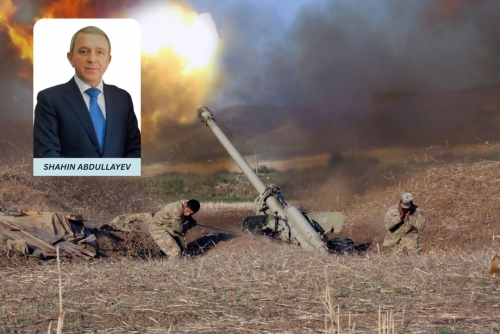
September 27 holds a special place in the modern history of Azerbaijan. On this day in 2020, the Patriotic War began, putting an end to the long-standing occupation problem and ensuring the territorial integrity of the country. Today, this date is observed as Remembrance Day, when the Azerbaijani people pay deep respect to all their martyrs. This day is a symbol of the nation’s fighting spirit, self-sacrifice, and the state’s political and military strength. The Patriotic War was not only a military operation but also a manifestation of national unity, the people’s resolve, and the just cause of Azerbaijan based on international law. During the 44- day war, the Azerbaijani Armed Forces liberated the occupied territories and restored historical justice, ending Armenia’s long-standing occupation policy.
The war changed political and military realities that had been forming for decades. Armenia had long propagated myths about the invincibility of its army and attempted to create the illusion internationally that Karabakh was unreachable for Azerbaijan. However, these myths were shattered within just 44 days. As a result of successful operations, the Azerbaijani Army liberated large parts of Fuzuli, Jabrayil, Zangilan, Gubadli, Lachin, as well as Zangilan city, Hadrut town, and other strategic locations. The capture of Shusha marked the most glorious stage of the war. The liberation of Shusha not only restored Azerbaijan’s strategic position but also its cultural and spiritual center. Following this victory, Armenia was forced to sign a capitulation act, and on November 10, 2020, the trilateral statement officially ended the war.
Significant outcomes
Azerbaijan’s victory had significant political, diplomatic, and moral outcomes, in addition to the military success. The country ensured its territorial integrity in accordance with international law. UN Security Council resolutions adopted as early as 1993 demanded the end of the occupation, which had not been implemented until Azerbaijan’s decisive actions. President Ilham Aliyev described this historic event as a “victory of our people, the power of our state, and the restoration of justice,” emphasizing that Azerbaijan liberated its territories independently and that no one can take this victory away.
Azerbaijan’s victory also created new realities in the region. Local anti-terror measures conducted in September 2023 further reinforced these realities. Armenian armed forces remaining in Azerbaijan were swiftly removed, and the country’s sovereignty was fully restored. These operations demonstrated that Azerbaijan will no longer tolerate occupation or the presence of illegal armed forces.
Right after our victorious war, Azerbaijan declared its readiness to open a new page in relations with Armenia based on mutual recognition of territorial integrity and sovereignty. We proposed five basic principles rooted in international law. We tabled the proposal for a Peace Treaty. Then we initiated a negotiation process on its draft text, which lasted from October 2022 to summer 2025.
New phase
The post-war period marked the beginning of a new phase. One of the state’s main tasks was the Great Return—the resettlement of hundreds of thousands of internally displaced persons to their ancestral lands. Reconstruction projects in Karabakh and Eastern Zangazur were launched with modern approaches. Under the Great Return Program, already more than 50,000 people live, work, and study in the liberated territories.
Economic development is a key pillar of this process. Azerbaijan’s energy policy, involvement in international projects, and growth of the non-oil sector have created additional opportunities for the state budget. In recent years, non-oil exports have reached record levels, and new initiatives are being implemented in agriculture, tourism, and industry. Economic zones established in the liberated territories are expected to become major regional development centers. Funds for reconstruction come not only from domestic sources but also from international financial institutions.
Azerbaijan actively engages in global energy projects, both in fossil fuels and renewable energy, while establishing smart infrastructure in Karabakh and Eastern Zangazur. Almost 40 % of our energy will be generated by renewables by 2030. These efforts strengthen energy security, enhance regional connectivity, and position Azerbaijan as a strategic participant in global economic initiatives. As of today, we are supplying natural gas to 14 countries. This ranks Azerbaijan as the top country in the world in terms of the number of countries it supplies with pipeline gas.
Efforts to transform
Azerbaijan wasted no time and initiated efforts to transform the previously neglected lands during the occupation into a region with smart cities and smart villages, airports, and roads, and began cultivating agricultural areas. In this aspect, credible work has already begun to construct a highway from Fuzuli to Shusha and an international airport in Fuzuli. Azerbaijan is inclined towards transforming the region into an economic and tourism hub with the establishment of new transportation lines, the restoration of historical monuments, and the reconstruction of liberated cities.
The credit for this success directly goes to President Ilham Aliyev. His strategic thinking and firm leadership played a pivotal role in liberating the occupied territories and restoring peace. President Aliyev’s commitment to modernizing cities while preserving their historical heritage reflects his forward-thinking approach. The visionary leadership is devoting significant attention to foster developments through innovative and digital solutions to provide comfortable living conditions for the safe return of internally displaced people.
Strategic hub
The favorable geographic location of Azerbaijan makes our country to become a strategic hub of regional economic policy. The transit volume of goods through the Middle Corridor is increasing each year. This indicator is expected to ramp up in next years, in particular, with commissioning of the Zangazur corridor. The modern infrastructure created in the country, including Baku International Trade Sea Port, Alat Free Economic Zone and modern railway network offer all amenities to the investors in terms of direct access to global markets and high transit efficiency. At the same time, special economic zones coupled with modern transportation and digital infrastructure offer ready-to-go platforms for production, logistics, renewable energy, digital services and high value chain agriculture.
Since the first days of gaining independence, the Republic of Azerbaijan has always supported the fostering of international cooperation in all areas. We believe that the only way to reach stability and prosperity lies across dialogue and partnership. Azerbaijan makes constructive steps to ensure peace and stability in its region – the South Caucasus. One of main targets we assigned for ourselves, is to build a new cooperation format in the region based on mutual trust, security and pragmatism. We are of opinion that the purposeful actions done in this direction will favor further fostering partnerships between neighboring countries in the future.
The Joint Declaration was signed between Azerbaijan and Armenia in the witness of the US in Washington on August 8, 2025. Thus, the important historic step was made towards ending the long lasting conflict between our countries and signing the peace agreement. The full instauration of prosperity in the South Caucasus will open up opportunities not only for our region, but also for Central Asia, Middle East and Europe.
Historic step
This agreement represented a historic step toward normalizing relations with Armenia. President Ilham Aliyev stated that the agreement laid the foundation for sustainable peace and opened broad opportunities for the future of the region. This agreement is a diplomatic victory for Azerbaijan, as it reaffirmed the country’s sovereignty and territorial integrity at the international level. The signing of the agreement in the U.S. also reflects Azerbaijan’s growing international influence. This event proves that the struggle that began on September 27 was not only a military victory but also a diplomatic achievement.
Azerbaijan is inclined towards transforming the region into an economic and tourism hub with the establishment of new transportation lines, the restoration of historical monuments, and the reconstruction of liberated cities. Azerbaijan has always championed internationalism, stood on the right side of history and the progressive side of humanity, and contributed to peace and development. All these major developments were made possible due to President Aliyev’s farsightedness and vision, which have helped the nation become more resilient. Azerbaijan is committed to ensuring that the citizens of these territories can enjoy the benefits of peace and progress and that they have the opportunity to build a bright future for themselves and their children.
For every Azerbaijani citizen, September 27 is a day to pay tribute to martyrs and honor their sacrifices. It is also a day to look to the future, strengthen the state, and work for peace. Azerbaijan’s victory, the Great Return, and economic development are key components of achieving these goals.
(The author is Azerbaijan’s ambassador to Saudi Arabia. The views and opinions expressed in this article are those of the author and do not necessarily reflect the official policy or position of the Daily Tribune)
Related Posts