

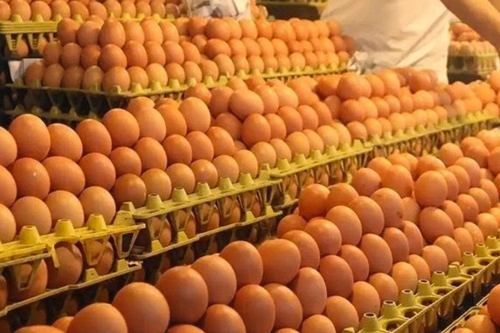
Egg production doubles in Bahrain over decade
TDT | Manama
Email: mail@newsofbahrain.com
Bahrain’s egg output hit its highest level in a decade last year, reaching 139.7 million eggs after farm upgrades and new work in the poultry trade.
The 2025 total was up from 126.4 million eggs in 2024, a rise of 13.3 million eggs, or 10.5pc. It came after output had already climbed from 100.8 million eggs in 2023, showing the rise was not a one-off.
The figures point to a sharp change in a key food line. In 2015, Bahrain produced 63.2 million eggs. By 2025, that had risen by 76.5 million eggs, or about 121pc.
The fastest gains have come in recent years. Output rose from 80.4 million eggs in 2021 to 139.7 million in 2025, an increase of 59.3 million eggs in four years.
The pace has picked up since 2022. Production rose from 91.9 million eggs that year to 139.7 million in 2025, adding 47.8 million eggs in three years, or nearly 52pc.
The decade falls into three clear stages. From 2015 to 2019, output rose from 63.2 million eggs to 90.3 million. It then fell to 82.943 million in 2020 and 80.4 million in 2021. From 2022, it climbed again, passed 100 million in 2023, reached 126.4 million in 2024, and then hit the latest peak in 2025.
The rise has run alongside expansion work at the General Poultry Company, which comes under Bahrain Food Holding Company. Since 2020, the company has worked on higher egg output through upgraded barns, automated gear, wider capacity, and new packing, sorting and storage work.
The company has also been preparing newer poultry farms for table egg output, with systems aimed at lifting yields, cutting waste and raising the quality of local eggs.
The second phase of the company’s expansion aims to lift the local share of table eggs to 63pc and raise the company’s own output by a further 50pc.
The work forms part of a wider push to raise Bahrain’s home-grown food supply and reduce its need for imports in basic goods. Higher local egg output is also meant to shield the market from swings in overseas prices, freight costs and supply delays.
Related Posts