

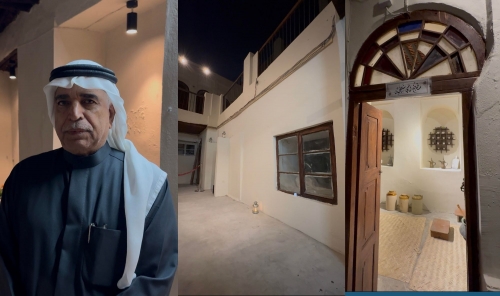
A House That Refuses to Leave in Bahrain
In the heart of Manama , Beit Al Qusair stands quietly as the city moves on around it. Towers have risen, old streets have shifted, and neighbouring homes have vanished. This house did not. It remains the last surviving home of the family in the area, holding its ground with a calm certainty that modern concrete cannot imitate. It is not preserved as a monument but lived with as memory, habit, and meaning.
The house carries time in layers. One section was built around 150 years ago, the other nearly 90 years later, each reflecting a different chapter of Bahrain’s past. Both were constructed using traditional Bahraini techniques, with wooden doors and windows crafted from materials no longer used today. Inside, the house breathes gently through its original features, including a ceiling fan that has turned for more than a century, circling above conversations that have long since passed.
For generations, Beit Al Qusair was known for its open doors. Separate majlis spaces for men and women formed the social heart of the house, shaping daily life within its walls. In earlier years, the men’s majlis welcomed visitors every single day, offering a place to talk, listen, and belong. Today, the tradition continues more quietly, with gatherings held twice a week on Mondays and Thursdays, steady rather than fading.
Ramadan brought a different rhythm. The majlis once filled every evening with guests arriving for iftar, turning the house into a shared table for the community. That same authenticity later drew television producers, who used the house as a filming location for Ramadan programmes, relying on its real atmosphere to tell Bahraini stories without sets or staging.
Permanent living in the house ended after the Covid pandemic, when the last brother moved elsewhere. Yet the house never became empty. It remained a meeting point, drawing brothers, sisters, sons, and daughters together week after week. Today, the family gathers once a week, fewer days perhaps, but with the same emotional weight.
In a special interview with The Daily Tribune, a family member reflected on the commercial life that once flowed through the house. His father was a trader who imported the first Marconi radio sets into Bahrain and distributed them locally. He later worked in marine engines and agricultural water pumps, using boats to move goods and passengers from large ships to the local port. The family also traded bicycles and motorcycles, importing and re-exporting them across the Gulf, linking the house to a wider regional economy.
Beit Al Qusair does not seek attention. It simply remains, doing what it has always done, holding people together long after the city around it has changed.
Related Posts