

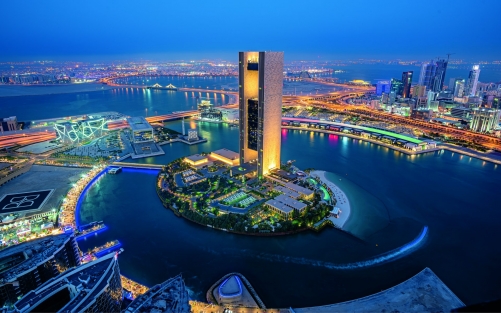
Bahrain’s luxury housing market on $6.12bln growth path by 2030
TDT | Manama
Email : editor@newsofbahrain.com
Bahrain’s luxury residential property market is growing, with Mordor Intelligence putting its value at $4.26 billion in 2025 and projecting it to reach $6.12 billion by 2030, a compound annual growth rate of 7.5 per cent.’
The report links the rise to higher cross-border wealth, rules allowing 100 per cent foreign ownership, and national infrastructure spending of around $30 billion that is widening the pool of high-end projects and attracting investors who once focused on other Gulf markets.
Building activity is concentrated in large waterfront schemes such as Bahrain Bay and Diyar Al Muharraq.
These developments mix homes with five-star hotels and retail space, enabling developers to charge price premiums of about 20 to 30 per cent compared with inland areas.
Value
Limited shoreline plots are pushing up villa and luxury home prices, while flood-resistant design and sustainability measures are adding value for buyers who factor in ESG aims.
Demand is being lifted by a growing number of wealthy buyers in the GCC and within Bahrain.
The report says high-networth purchasers now form a larger share of the market and tend to place weight on location, privacy and long-term value rather than price alone.
Sales
Waterfront villa projects have seen strong early sales, with some recording pre-sales above 80 per cent before construction starts.
Policy shifts are also reshaping access for overseas capital.
Full foreign ownership and the golden visa scheme have eased barriers that once limited non-Bahraini buyers, while operating costs in Bahrain are described as 27 per cent lower than in competing Gulf financial hubs.
Enquiries
Developers are seeing more enquiries from European and Asian investors who had previously stayed away because of joint-venture requirements.
Transport projects are expected to feed into the market.
The $2 billion Bahrain Metro and the $3.5 billion King Hamad Causeway are designed to improve links between Manama and the Northern Governorate, increasing access to newer districts and widening the likely buyer base for luxury housing there.
The schemes also back public transport and reduced reliance on private cars, which is expected to appeal to younger expats and professionals.
Homes
Villas and landed homes held 70.11 per cent of the market in 2024, driven by Gulf families’ preference for space, privacy and multi-generation layouts.
Apartments and condominiums, however, are forecast to grow faster from 2025 to 2030, with a projected CAGR of 7.89 per cent, as younger buyers and foreign investors look for readyto-live units with integrated amenities such as hotel-style services, private lifts and shared leisure rooftops.
Related Posts