

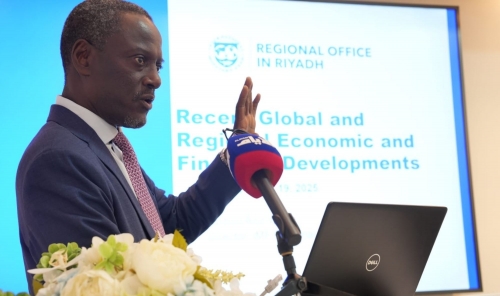
Derasat ‘Think Talk’ Explores Global and Regional Economic Shifts with IMF Regional Director
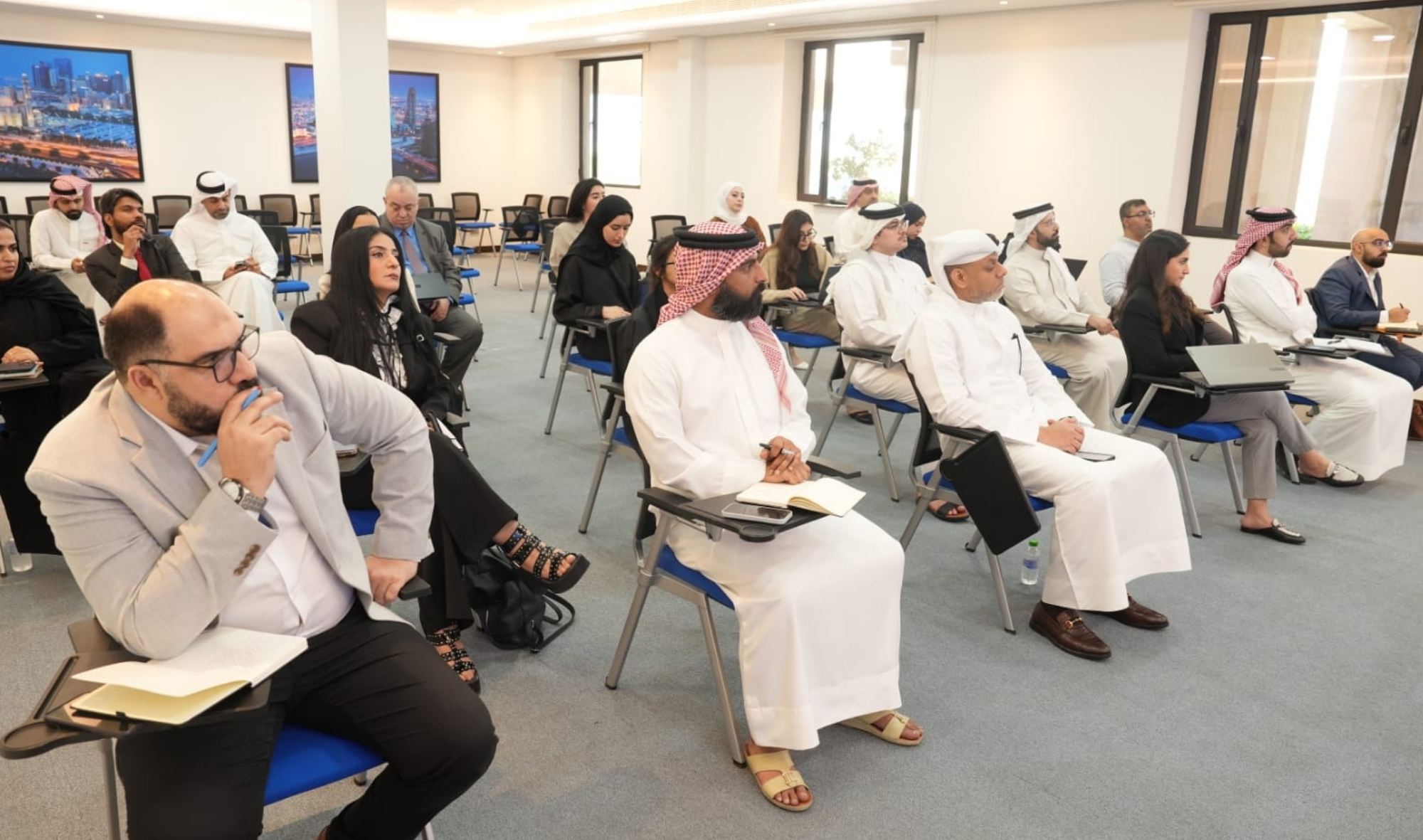
The Bahrain Center for Strategic, International and Energy Studies (Derasat) hosted a new edition of its ‘Think Talk’ series, featuring a lecture titled “Recent Global and Regional Economic Developments.” The session was delivered by Dr. Abdoul Aziz Wane, Director of the International Monetary Fund (IMF) Regional Office in Riyadh, and moderated by Dr. Omar Ahmad Al-Ubaydli, Director of Studies and Research at Derasat. The event drew economists, experts, researchers, and attendees with a keen interest in economic affairs.
Dr. Wane opened his lecture by outlining the major transformations reshaping the global economy, including the rapid evolution of supply chains, the expanding role of artificial intelligence in enhancing productivity, and the growing influence of new industrial policies on global growth and investment patterns.
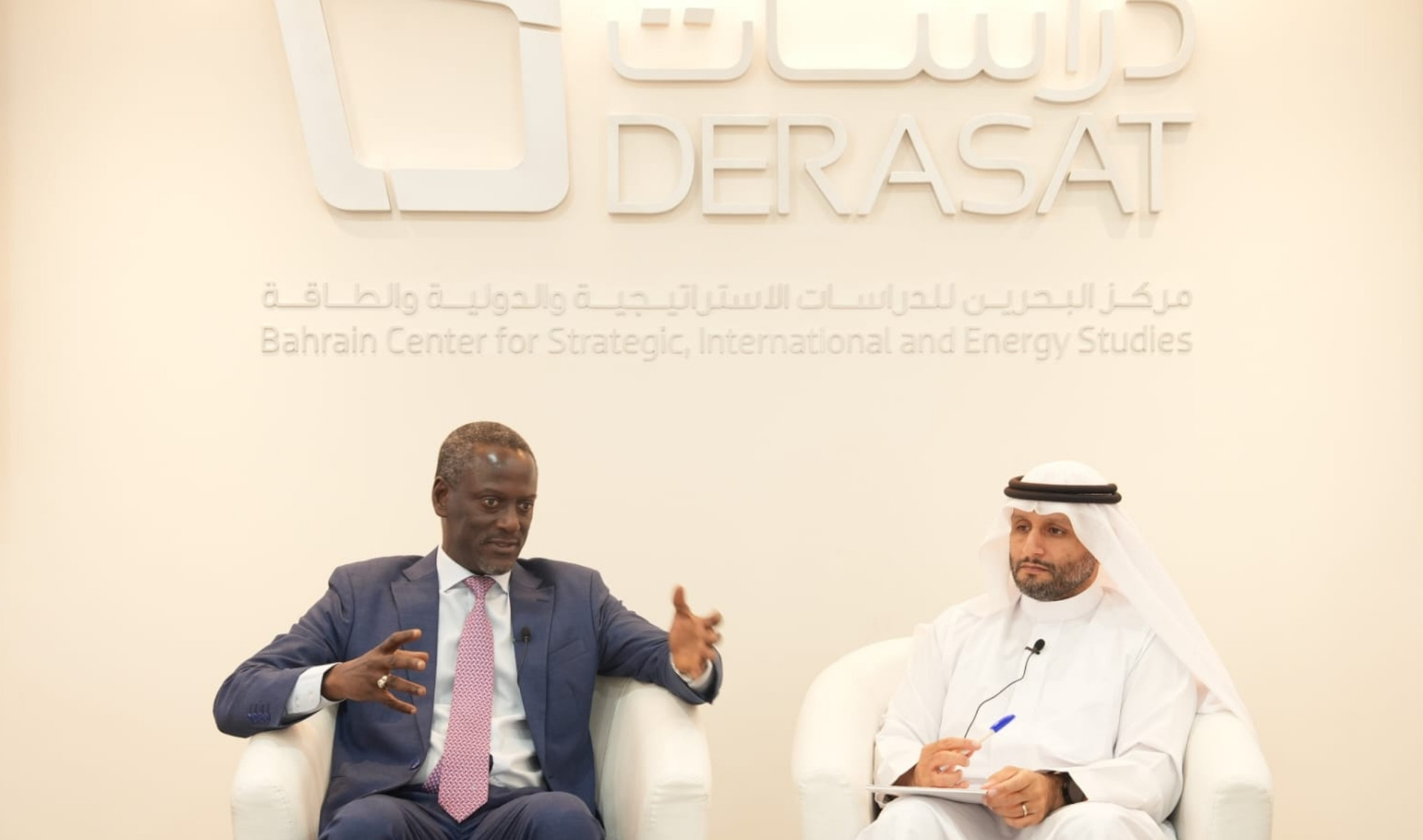
He presented a comprehensive overview of the current economic landscape, noting that the world is navigating a delicate phase marked by major shifts in energy markets and the increasing impact of advanced technologies and AI on production and growth. He explained that both advanced and emerging economies are working to adapt their fiscal and monetary policies to a constantly shifting global environment, highlighting the importance of capacity-building and improving the efficiency of public policies.
Turning to regional developments, Dr. Wane emphasized the strengthening economic position of the Gulf Cooperation Council (GCC) countries, not only as key energy suppliers but as dynamic models of economic diversification and advancement in industrial, financial, and technological sectors. He noted the Kingdom of Bahrain’s leadership in these efforts through its ongoing modernization of the economic system and business environment — a reflection of a national vision built on innovation, openness, and resilience.
Dr. Wane also highlighted the IMF Regional Office’s commitment to deepening dialogue with countries in the region, enhancing cooperation in capacity-building, supporting economic policy development, and creating shared knowledge platforms that connect policymakers and experts globally. International cooperation, he stressed, is now essential for developing sustainable economic solutions amid worldwide shifts in energy and technology.
During the discussion, participants explored topics such as the GCC’s role in stabilizing energy markets, growth opportunities in non-oil sectors, and emerging trends in fintech, artificial intelligence, and digital transformation. Dr. Wane noted that the region’s strong economic potential positions it as a key player in future development pathways.
The lecture reflects Derasat’s ongoing mission to enrich economic and intellectual dialogue by providing interactive platforms that bring together leading international institutions and the research community in Bahrain, fostering knowledge exchange and keeping pace with global and regional developments.
Related Posts