

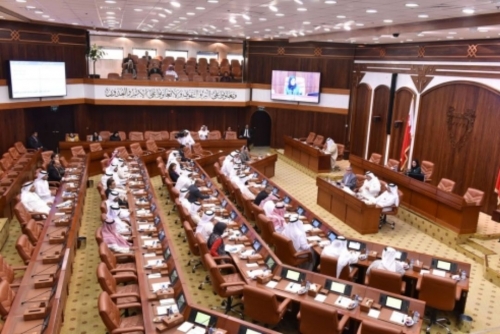
Government rejects 50% Bahrainisation rule in privatisation bill
TDT | Manama
Email: mail@newsofbahrain.com
Mandating a flat 50% Bahrainisation clause in privatisation contracts conflicts with existing laws and curbs economic freedom, the government said in objections to a bill recently tabled.
The memo adds that the clause would complicate contracts, deter bidders in capital-intensive projects with small teams, and strain sectors requiring skills that are scarce locally.
Opposing the move, the government warns that it contradicts Articles 2 and 6 of the Privatisation Policies and Controls Law, which give the Cabinet the authority to set policy and determine how to restructure assets in line with global practice.
If approved, the bill would add a paragraph to Article 4 of Decree-Law 41 of 2002, requiring that at least half of the staff be Bahraini in any privatisation deal.
“Laws should be read as a whole, and a fixed hiring term would blunt the effect of those articles,” the memo states, citing Constitutional Court rulings.
Officials say a single, fixed rule would not align with recognised methods such as public share offers, competitive tenders, negotiations with bidders, sales to employees, outsourcing, or joint ventures.
Mandating a compulsory quota in contracts removes the possibility of negotiation, effectively turning state deals into near adhesion agreements. “This would come down hard on the freedom of contracts,” the memo warned.
The memo also points to Article 10(a) of the Constitution and the National Action Charter, which uphold free enterprise and the role of the private sector.
The government adds that Bahrainisation is already pursued through bid scoring, with current criteria rewarding higher national-labour ratios, training plans, knowledge transfer, and community engagement— allowing the state to favour bidders who pledge stronger outcomes without imposing a one-size-fits-all term in every contract.
After referral under Article 92(1) of the Constitution and Article 95 of Parliament’s rules, the Legislation and Legal Opinion Commission drafted the text and attached its legal opinion.
Related Posts