

Penalty reform
New Press Law amendments propose replacing jail terms for publishing offences with BD10,000 fine
TDT | Manama
Email: mail@newsofbahrain.com
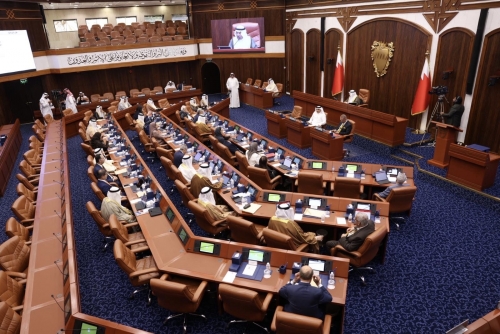
Prison terms for publishing offences would be scrapped under Press Law changes going to the Shura Council on Sunday.
The draft would license professional electronic media and give existing outlets six months to comply.
Fines would replace jail, with penalties up to BD10,000.
Professional online platforms would need licences. Foreign correspondents would require permission to work in Bahrain, with the arrangements to be set by royal decree.
Courts could suspend newspapers or block websites at the investigation stage where content is judged to threaten national security or public order.
Notices
Media outlets, in print and online, must carry official notices on sovereignty, defence, security or health if received in time for release.
The ministry, working with the Ministry of Foreign Affairs, may direct outlets not to publish certain material issued by foreign governments, with breaches punishable by fines.
A wide clause that would have allowed the Minister of Information to license media and advertising activity outside current laws was removed after MPs questioned its scope and checks.
Platforms
The revised text defines ‘electronic media’, ‘electronic media platforms’ and ‘media and advertising activity’ to set the law’s reach, and exempts government-run platforms.
It also draws a line between regular, professional media work and personal accounts, leaving the latter outside its scope.
MPs passed the amendments on 8 May. The bill was sent back to the Services Committee in October 2023 for redrafting, which produced tighter limits on ministerial powers and a revised penalty scale.
Jurisdiction
A proposal to move publishing-offence cases entirely to the civil courts was dropped; jurisdiction stays with the High Criminal Court.
The Ministry of Information says the draft balances freedom of opinion and expression with legal oversight.
It was prepared with Parliament’s Services Committee, working with the Public Prosecution, newspapers and the Bahrain Journalists Association (BJA), and drew written input from MPs, journalists and social-media figures.
Aims
The National Institution for Human Rights supports the aims but asked the Shura Council to revisit Parliament’s wording for Articles 71, 78 and 85 in light of Article 19 of the International Covenant on Civil and Political Rights and General Comment No. 34.
The BJA told the committee on 27 July that it had no further remarks.
Al Watan urged that any change rest on Article 23 of the Constitution, welcomed the removal of jail terms and called for clearer binding protections for the profession.
Protections
Al Ayam backed the bill and Parliament’s changes, saying passage would strengthen legal protections for journalists, widen media freedoms and help Bahrain’s standing in global press-freedom and media-transparency rankings.
Committee papers say the draft is sound in constitutional and legal terms.
It would retitle Decree-Law 47 of 2002 as the Decree-Law on the Regulation of the Press and Electronic Media, replace ‘discipline’ with ‘accountability’ in Chapter Five of Part Three, and substitute ‘Kingdom’ for ‘State’ in Articles 19, 25 and 90.
Provisions
It would update a set of provisions, add new definitions to Article 3, insert Articles 71 bis and 73 bis and a new paragraph in Article 90, and create a new Chapter Five bis on electronic media covering Articles 67 bis to 67 bis (9).
It would repeal Articles 70 and 72 and remove a cross-reference to Article 70 in Article 80. Existing electronic media sites would have six months to regularise their status once the law takes effect.
Related Posts