

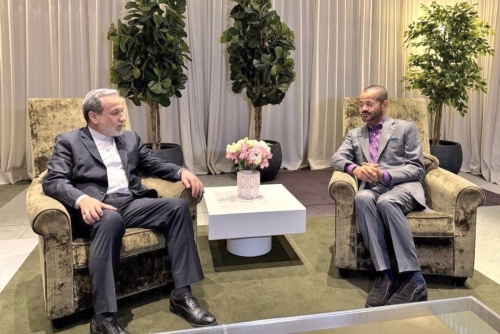
US–Iran Nuclear Talks Report Progress, Next Round Planned in Vienna
Email: online@newsofbahrain.com
Geneva: Indirect negotiations between the United States and Iran have produced what mediators described as meaningful headway, following high-level talks in Geneva. Oman’s foreign minister Badr Albusaidi, who facilitated the discussions, said the delegations would return to their capitals for consultations before resuming negotiations soon, with technical talks scheduled next week in Vienna.
Iran’s delegation was led by Foreign Minister Abbas Araghchi, who said progress had been achieved on several points, although significant differences remained. He confirmed that further talks would follow within days and stressed that Iran’s right to peaceful nuclear activity remained a central position for Tehran.
The discussions come as pressure continues to mount from Washington. President Donald Trump has reinforced US military deployments across the Middle East and repeatedly warned of possible military action should diplomacy fail. Officials familiar with the talks say the renewed diplomatic track could temporarily ease the risk of escalation, even as the broader standoff over Iran’s nuclear programme remains unresolved.
According to Iranian media, negotiators rejected US demands for a permanent halt to uranium enrichment and the removal of Iran’s enriched stockpile, while indicating openness to limited and closely monitored restrictions. In exchange, Tehran is seeking broad sanctions relief to revive its economy. Araghchi said the lifting of punitive measures was a core requirement for any future agreement.
The US delegation included special envoy Steve Witkoff and presidential adviser Jared Kushner, while Rafael Grossi, head of the International Atomic Energy Agency, joined the discussions. Russia’s and Iran’s regional activities, as well as Tehran’s refusal to discuss limits on its missile programme or its backing of groups such as Hamas, Hezbollah and the Houthis, remain outside the current negotiating framework.
Despite the cautious optimism, major political obstacles persist. Israeli Prime Minister Benjamin Netanyahu has warned against any deal that does not address Iran’s missile capabilities and regional proxies, while Iran’s Supreme Leader Ali Khamenei continues to reject what he calls external pressure. With both sides still divided over enrichment limits, sanctions and security guarantees, diplomats say the coming technical round in Vienna will be a critical test of whether the renewed dialogue can translate into a viable agreement.
Photo Credit: X/@IRIMFA_EN
Related Posts