

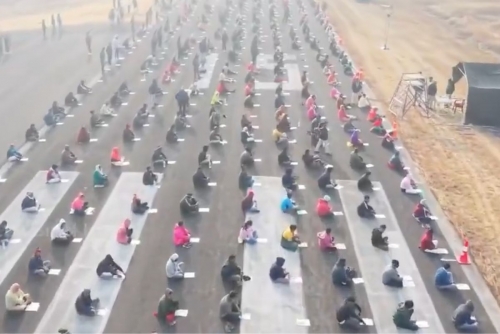
Employment Crisis in India: Airstrip Becomes Exam Hall for 8,000 Candidates
Email: online@newsofbahrain.com
The Jamadarpali airstrip in Odisha’s Sambalpur district was recently transformed into a sprawling open-air examination hall as nearly 9,000 job seekers gathered to compete for just 187 home guard vacancies. Despite the position requiring only a Class V education and offering a daily wage of less than ₹650 (BD 2.73), the recruitment drive saw a massive influx of overqualified candidates, including engineers, MBAs, and computer science graduates. This overwhelming turnout highlights a profound disconnect between academic achievement and market opportunities, as highly educated youth increasingly seek the stability of even the lowest-tier government-related roles.
To manage the unprecedented crowd, the local police department executed a high-level security operation that utilised the airstrip's runway to ensure orderly conduct. Supervised by the Sambalpur SP and supported by over 200 officers, as well as aerial drone surveillance, the site resembled a public gathering more than a formal academic setting. Officials reported that while more than 11,000 persons applied for the posts, the sheer volume of attendees forced authorities to move the examination to the airstrip after traditional venues were deemed inadequate to handle the logistical challenge.
This scene has sparked significant public debate and political criticism, serving as a stark visual representation of a deepening unemployment crisis in the country. Critics point to sluggish industrial growth, a mismatch between vocational training and industry needs, and a general scarcity of private-sector opportunities as the primary drivers of this desperation. As similar overcrowding has been reported in other districts like Jharsuguda and Bhubaneswar, the event underscores an urgent need for structural reforms and job creation strategies to accommodate the country's growing population of educated but underemployed youth.
Related Posts