

Deadly 6.3-Magnitude Quake Rattles Afghanistan, Injures Hundreds
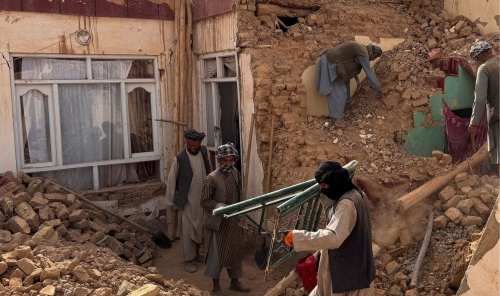
A powerful 6.3-magnitude earthquake struck northern Afghanistan early Monday, leaving at least 20 people dead and more than 600 injured, as rescue operations continued amid fears the death toll could rise. The quake also caused extensive damage to homes, infrastructure, and the historic Blue Mosque in Mazar-e-Sharif.
According to the U.S. Geological Survey, the earthquake hit at a depth of 28 kilometers near Mazar-e-Sharif, a major city of over half a million residents known for its cultural landmarks and religious shrines. The tremor, which struck around 1 a.m. local time, sent residents fleeing into the streets in panic as buildings swayed and collapsed.
“We felt the ground shaking violently for about 15 seconds,” said Mohammad Rahim, a resident of nearby Tashqurghan district. “When we finally got outside, there was so much dust we couldn’t see anything.”
Preliminary figures from the Afghanistan National Disaster Management Authority reported 20 fatalities and 643 injuries, including 25 in critical condition. Hospitals across Balkh province were placed on high alert, while military and health teams were dispatched to the affected zones.
Footage released by the Afghan Ministry of Defence showed rescuers pulling survivors and bodies from the rubble. The Taliban government’s spokesman in Balkh province, Haji Zaid, said “many people are injured” in Sholgara district, adding that most injuries were caused by people falling from tall buildings during the tremor.
The earthquake also disrupted the country’s electricity supply, with power outages reported across Afghanistan—including Kabul—after transmission lines from Uzbekistan and Tajikistan were damaged.
One of the most notable landmarks affected was Mazar-e-Sharif’s iconic Blue Mosque, a 15th-century site revered by Shia Muslims. Videos shared online showed parts of the mosque’s outer walls and courtyard littered with debris.
The United Nations mission in Afghanistan (UNAMA) said it was working alongside local authorities to support rescue and relief efforts. “We stand with the affected communities and will provide necessary support,” UNAMA posted on X (formerly Twitter).
India, which has been seeking to rebuild diplomatic ties with Afghanistan since 2021, also pledged humanitarian assistance.
This latest quake follows a 6.0-magnitude earthquake that hit eastern Afghanistan in August, killing more than 1,100 people. Afghanistan’s mountainous terrain, poor infrastructure, and widespread use of mud-brick homes make it particularly vulnerable to seismic disasters.
Experts note that the country lies at the intersection of the Indian and Eurasian tectonic plates—one of the world’s most active earthquake zones. With rescue operations ongoing and communication lines limited, authorities warn the true scale of Monday’s disaster may not be known for days.
Related Posts