

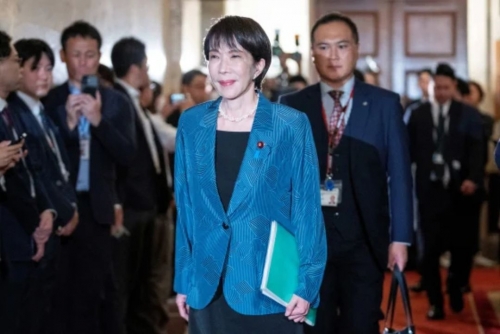
Sanae Takaichi Makes History as Japan’s First Female Prime Minister — But Is It Truly a Win for Women?
TDT | Manama
Email: mail@newsofbahrain.com
After years of speculation and setbacks, Japan has crossed a historic milestone — the appointment of its first-ever female prime minister, Sanae Takaichi. Yet, amid the celebrations, her rise to power has sparked a deeper debate across the nation: is this a victory for women, or simply a new face in the same old politics?
In a country where women hold only 16 percent of seats in the lower house of parliament — and where gender equality ranks among the lowest in the developed world — Takaichi’s ascension is nothing short of groundbreaking. The 63-year-old conservative has shattered Japan’s toughest political glass ceiling, stepping into a world long dominated by grey suits and old power blocs.
However, her historic moment has been anything but smooth. Takaichi’s leadership of the Liberal Democratic Party (LDP) was thrown into turmoil when its coalition partner, Komeito, abruptly withdrew from the alliance, leaving Japan’s ruling party scrambling to secure enough parliamentary support.
For a tense few days, her appointment hung in the balance as opposition parties sought to form a rival coalition. Then, on Monday, the LDP struck a deal with the right-wing Japan Innovation Party, narrowly securing a minority government and cementing Takaichi’s place as prime minister.
A Conservative First for a Progressive Moment
Yet many Japanese citizens, especially women, are conflicted. Takaichi has long championed traditional family values and resisted progressive reforms that advocates say are essential for equality. She supports the law requiring married couples to share a surname — a policy that overwhelmingly pressures women to adopt their husband’s name — and she has opposed the idea of a female emperor.
“It’s almost like she’s popular despite her gender, rather than because of it,” said Professor Tina Burrett of Sophia University, reflecting a sentiment shared by many who see Takaichi’s leadership as symbolic but not necessarily transformative.
From Political Underdog to Japan’s Top Office
Takaichi’s journey to the top was far from effortless. She narrowly missed the premiership last year when she lost to Shigeru Ishiba in the LDP leadership race. Ishiba’s brief term ended in disaster after a snap election cost the coalition its majority — a political misstep that paved the way for Takaichi’s comeback.
This time, she won decisively against moderate rival Shinjiro Koizumi, signaling a shift in Japan’s political mood. According to Professor Burrett, “When the LDP is in trouble, they often move away from their technocratic moderates toward someone who has charisma — someone who can shake things up. Takaichi is that person.”
A Historic Yet Complex Beginning
As Japan faces mounting challenges — from a weak yen and stubborn inflation to a growing cost-of-living crisis — Takaichi’s policies will be tested early. Her leadership represents both a symbolic and strategic gamble: a woman at the helm of a nation still wrestling with gender imbalance, chosen not necessarily for reform, but for resilience.
For now, Japan has made history. Whether that history marks a turning point for its women — or merely a change in the face of its politics — remains to be seen.
Related Posts