

UK Repatriates Over 92,000 Nationals Amid Middle East Crisis
Email: online@newsofbahrain.com
UK Repatriates Over 92,000 Nationals Amid Middle East Crisis
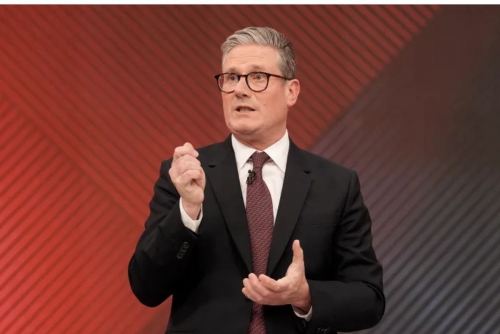
LONDON: United Kingdom Prime Minister Sir Keir Starmer has declared that the United Kingdom “will not be drawn into the wider war,” even as he confirmed he is working alongside international allies on a viable plan to reopen the Strait of Hormuz. Resisting direct pressure from Donald Trump, the Prime Minister has refused to deploy Royal Navy warships to secure the vital oil and gas shipping route, which has been effectively shuttered by the ongoing conflict with Iran.
Starmer framed this resistance as a matter of national interest, asserting that the decision to put British personnel in harm’s way is the “toughest question” any leader faces. He maintained that any such deployment must be built upon a "properly thought out plan" and a firm legal basis, rather than reactionary pressure.
Central to the Prime Minister’s strategy is the conviction that the UK’s first priority is to protect "our people in the region." To this end, Starmer provided a significant update on the scale of British operations, noting that over 92,000 nationals have already been repatriated via commercial and government-chartered flights.
The UK maintains a formidable presence in the area, with thousands of service members stationed in Cyprus, supported by three fighter jet squadrons and specialized counter-drone teams tasked with intercepting Iranian attacks. Starmer defined his leadership style through this cautious but prepared stance, stating that true statesmanship involves "standing firm for the British interest, no matter the pressure."
Beyond the immediate tactical concerns, Starmer emphasized that the crisis in the Middle East must not be allowed to become a "windfall for Putin." In a morning meeting with Canadian Prime Minister Mark Carney and ahead of critical talks with President Volodymyr Zelenskyy, the Prime Minister reinforced the necessity of continued support for Ukraine.
He warned that global instability should not provide Russia with the diplomatic or military cover to escalate its own aggression. This diplomatic coordination, bolstered by Foreign Secretary Yvette Cooper’s recent regional tour, signals a UK foreign policy that is attempting to manage two volatile fronts simultaneously without compromising its long-term security commitments.
To shield the domestic economy from the spiraling costs of this geopolitical instability, Starmer used the Monday press conference to unveil a £53 million support package for struggling households. This targeted intervention is designed specifically for the 1.5 million homes reliant on heating oil, a group traditionally left vulnerable because heating oil falls outside the standard energy price cap.
While Chancellor Rachel Reeves is expected to provide the full details of these direct payments next week, the Prime Minister framed this as a necessary "shield" against the $100 a barrel oil prices that are currently threatening the British standard of living.
The British government is positioning these domestic measures as a necessary but temporary "shield" against a global crisis. While the state is prepared to intervene with Energy Secretary Ed Miliband even hinting at a potential freeze on fuel duty. Starmer was candid about the limits of taxpayer-funded subsidies. He made it clear that the government cannot simply spend its way out of a global energy spike indefinitely.
By linking the peace process in the Middle East directly to the price of a British grocery bill, Starmer positioned de-escalation as the true economic necessity for the nation. He concluded that while the UK will continue to support its citizens and allies, the only permanent way to lower the cost of living at home is to achieve stability abroad. For Starmer, securing the British interest means that regional peace is no longer just a diplomatic goal, but a domestic priority.
Photo Credits: AFP
Related Posts