

Bahraini Halwa: A Sweet Symbol of Heritage, Harmony, and Home
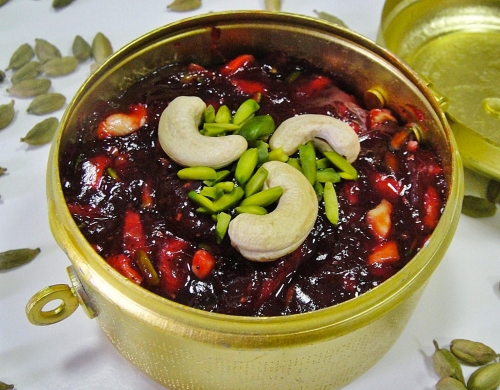
Few sweets capture the soul of a nation the way Bahraini halwa does. Found in its iconic shimmering red and green varieties, this delicacy is more than just a confection; it is a story of Bahrain itself: warm, welcoming, and rich with centuries of cultural exchange. My first memory of this sweet goes back to when my mother bought a round tin of the glossy red halwa from Showaiter. It is no surprise that Showaiter is considered one of the best, with its many shops across Bahrain, especially along Exhibition Road. I still remember that first experience vividly. The halwa looked sticky as I scooped a little, yet the texture was gently chewy and a bit gummy. Its sheen reflected the hours of slow cooking that go into making it, a true labour of patience. The first bite was sweet and fragrant, filled with the warmth of cardamom and saffron and the crunch of nuts that added texture. In that moment, I finally understood why my mother insisted on bringing some home. On Bahrain National Day, these flavours become even more meaningful, reminding us of the traditions that shape our identity.
The word halwa comes from the Arabic term “hulw,” meaning sweet. Its linguistic roots stretch across the Middle East, South Asia, and the Mediterranean, where countless variations of halwa exist. But the Bahraini version, soft, glossy and gently elastic, is distinct and deeply tied to the island’s history as a trading hub. The recipe travelled through Persia, India, and the Arabian Peninsula, absorbing influences along the way. Early Gulf merchants interacted closely with Persian traders, exchanging not only pearls and dates but also saffron, cardamom, and rosewater, ingredients that would become the aromatic signature of Bahraini halwa.
This Persian connection remains clear today. The method of slowly cooking starch, sugar, ghee, spices, and nuts in large copper pots mirrors older Persian traditions, yet Bahrain transformed it into something uniquely its own. Families like the renowned Showaiter confectioners perfected the art, turning halwa into a national treasure.
What makes Bahraini halwa a favourite across generations is its unmistakable sensory experience. The red halwa, bright and jewel-like, glows with saffron and rosewater, its sweetness balanced by the warmth of cardamom. The green halwa, similar in texture but often infused with pistachio or herbal notes, offers an earthier richness. Both varieties have a satiny consistency that melts on the tongue when served with Arabic coffee.
Halwa also represents celebration. Weddings, Eid gatherings, family events, majlis hospitality and national festivities are never complete without it. To be offered halwa in a Bahraini home is to be welcomed with generosity and joy.
Beyond its flavour, halwa reflects what Bahrain has always been: a melting pot of cultures. Traders from Persia, India, Iraq, Oman and East Africa all contributed to the island’s culinary tapestry. This blend of influences is what makes Bahraini cuisine remarkably diverse yet firmly rooted in tradition.
And if you haven’t tried Bahraini halwa yet, this is the perfect time. Sweeten your National Day holidays with a taste of this beloved treasure.
Related Posts