

Gulf advances renewable energy transition amid regional tensions
A recent Standard & Poor’s report shows that Gulf countries, especially Saudi Arabia and the UAE, are continuing to invest heavily in renewable energy as part of long-term plans to cut emissions, diversify economies, and preserve oil and gas for export.
Despite ongoing conflicts in the Middle East, the report says there has been no major shift in clean energy strategies, although some projects may face timing delays. Overall, national goals remain firmly in place.
Rising global geopolitical tensions are also pushing countries to strengthen energy self-sufficiency, increasing demand for renewable energy, particularly in emerging markets.
Saudi Arabia aims for around 50% of its energy mix to come from renewables by 2030, while the UAE plans to triple its clean energy capacity and reach net-zero emissions by 2050. Both countries continue to advance these targets.
A key development highlighted in the report is the growing role of energy storage. With electricity demand rising - driven by AI, data centres, and cooling needs - solar and wind power alone are not enough due to their intermittent nature. Battery storage is becoming essential to store excess energy and supply it when needed.
Solar projects in the Gulf are also proving relatively resilient, supported by automation, local supply chains, and reduced dependence on complex logistics.
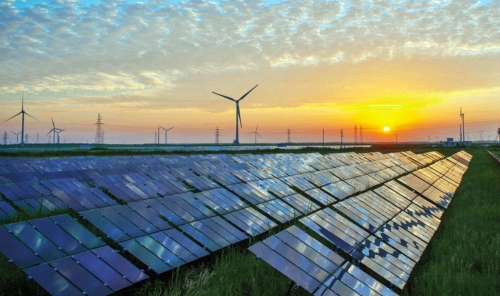
The region benefits from strong natural conditions, including high solar exposure, available land, and improving wind potential, particularly in Saudi Arabia, which has enabled rapid expansion of renewable capacity.
However, maintaining grid stability remains a challenge, especially during peak evening demand when solar output drops.
To address this, Gulf countries are investing heavily in large-scale battery storage systems to balance supply and demand.
Saudi Arabia and the UAE are among the global leaders in this area, with major storage targets and integrated renewable-energy projects under development.
Overall, the report highlights a clear shift: the Gulf is moving from pilot renewable projects to large-scale, long-term clean energy systems backed by strong investment and planning.
Related Posts