

'Gulf Resilience Built on Planning, Not Chance'
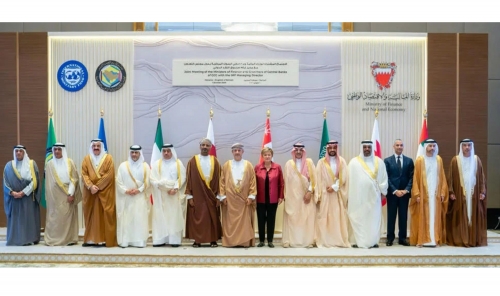
Bahrain became the Gulf's financial nerve centre this week, hosting back-to-back high-level meetings that brought together GCC finance ministers, central bank governors and IMF chief Kristalina Georgieva to map out the region's economic future amid recent regional turbulence.
Shaikh Salman bin Khalifa Al Khalifa, Minister of Finance and National Economy, chaired both the joint GCC-IMF session and the 126th Financial and Economic Cooperation Committee meeting, opening proceedings with greetings from His Majesty King Hamad bin Isa Al Khalifa and the Crown Prince and Prime Minister, HRH Prince Salman bin Hamad Al Khalifa.
The dominant theme: resilience. Shaikh Salman said the Iranian attacks on GCC states and attempts to disrupt maritime security had tested the region — and proven its ability to absorb shocks without losing momentum. He singled out the Strait of Hormuz and Bab El Mandeb as critical arteries for global trade and energy security, arguing that keeping them open and secure remains non-negotiable for global economic stability.
Bahrain's own numbers backed up the resilience narrative, with the Minister noting non-oil activities now make up more than 86% of GDP — a product of decades of economic diversification.
Looking ahead, Shaikh Salman flagged artificial intelligence and digital assets as the next frontier, urging GCC states to invest in digital infrastructure, talent and regulatory frameworks to stay competitive while managing the oversight challenges that come with increasingly interconnected digital financial systems.
On trade, he welcomed progress on a UK free trade agreement nearing technical completion and pushed for renewed momentum on EU talks, alongside continued work on the GCC Customs Union and Common Market.
Regional cooperation also got a boost: Bahrain thanked Saudi Arabia for logistical support strengthening Gulf supply chains, and highlighted a new currency swap agreement signed with the UAE as a marker of deepening financial integration.
Georgieva briefed ministers on the IMF's 2026 GCC Economic Surveillance report, while Dr. Jihad Azour, the Fund's Middle East and Central Asia Director, presented on policy priorities for sustaining stability amid geopolitical headwinds — rounding out a week that positioned Bahrain firmly at the centre of Gulf economic diplomacy.
Related Posts