

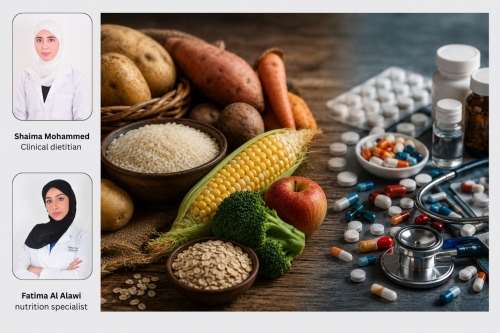
Health experts warn against stopping medication over diet trends
TDT | Manama
Email: mail@newsofbahrain.com
For patients exhausted by long-term medication, repeated clinic visits and chronic illness, the promise of healing through food can feel like a breakthrough.
That sense of hope is one reason the “Al Tayyibat” dietary approach—linked to the late Egyptian physician Diaa El Awady—has gained significant traction on social media.
The system, which categorises foods into “beneficial” and “harmful” groups, appeals to people seeking simpler, more natural ways of managing their health and reducing dependence on medication. Supporters say it encourages healthier eating by limiting processed foods, sugar and other dietary excesses.
However, medical professionals warn that problems begin when such dietary advice is interpreted as a replacement for prescribed treatment.
Diet-based healing claims
Interest in the “Al Tayyibat” approach has grown further online, particularly after Dr El Awady’s death, with supporters promoting his ideas and critics cautioning against using social media health content as a substitute for medical care.
Health experts stress that the concern is not about improving diet quality, but about patients with serious conditions making unsafe decisions—such as reducing or stopping medication—based on generalised advice or personal testimonials that may not match their medical needs.
Specialists warn
Bahraini nutrition specialist Fatima Al Alawi emphasised that food can support treatment but cannot replace prescribed medication without medical supervision.
She urged patients not to discontinue any prescribed drugs without consulting their doctor, adding that dietary plans should always be tailored and, when necessary, coordinated with treating physicians.
Clinical dietitian Shaima Mohammed echoed these concerns, noting that while many patients wish to reduce reliance on medication, lifestyle and nutrition changes should complement—not replace—medical treatment.
She warned that unsupervised medication changes can lead to serious and potentially life-threatening complications, especially for patients with chronic illnesses.
Shaima also cautioned against universal dietary systems that apply the same rules to all individuals, saying they ignore important differences in medical conditions, age and nutritional needs.
Evidence-based care urged
Health professionals also warned that some popular diet movements mix established nutritional principles with unverified claims, which can undermine trust in evidence-based medicine.
Their concerns align with regional health advisories, including recent warnings from Saudi Arabia’s Ministry of Health against using unverified diets as substitutes for medical treatment. The ministry reported cases where patients discontinued essential medications, including insulin, resulting in emergency medical intervention.
Experts say the issue goes beyond one diet trend—it is fundamentally about trust, misinformation and medical safety.
Related Posts