

Bahrain Grower Revives Lost Vegetables
TDT | Manama
Email: mail@newsofbahrain.com
Not all carrots are orange and they never were. Long before the familiar bright hue took over supermarket shelves, carrots existed in striking shades of purple, white, and yellow. This lesser-known history is now resurfacing, not in textbooks, but in a Bahraini home garden where one grower is bringing the original colours of carrots back to life.
Although orange carrots dominate global markets today, this was not always the case. Carrots were originally cultivated in colours such as purple, white, and yellow for centuries, particularly in regions of Central Asia and the Middle East. The shift to the orange variety is believed to have taken place in the 17th century in the Netherlands, where farmers selectively bred the crop into the orange form we recognise today. Some historical accounts suggest that this change was linked to the Dutch House of Orange. Today, these ancient varieties are slowly re-emerging through modern farming practices and personal agricultural projects, including initiatives in Bahrain.
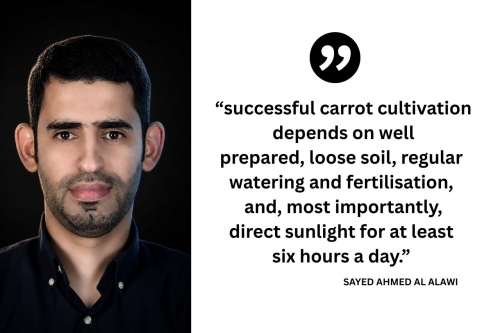
Bahraini home gardener Sayed Ahmed Al Alawi shares his journey with home farming, which began in 2019 after moving into his new house, where he initially purchased a few plants from local nurseries.
He explains that his interest in gardening evolved beyond a simple hobby after noticing weak plant growth in the early stages. This pushed him to research further and deepen his understanding of agriculture.
One of the main challenges he faced was insufficient sunlight exposure, which led him to relocate his plants to the rooftop. There, he was able to significantly improve his farming results through continuous learning and consulting with experienced growers.
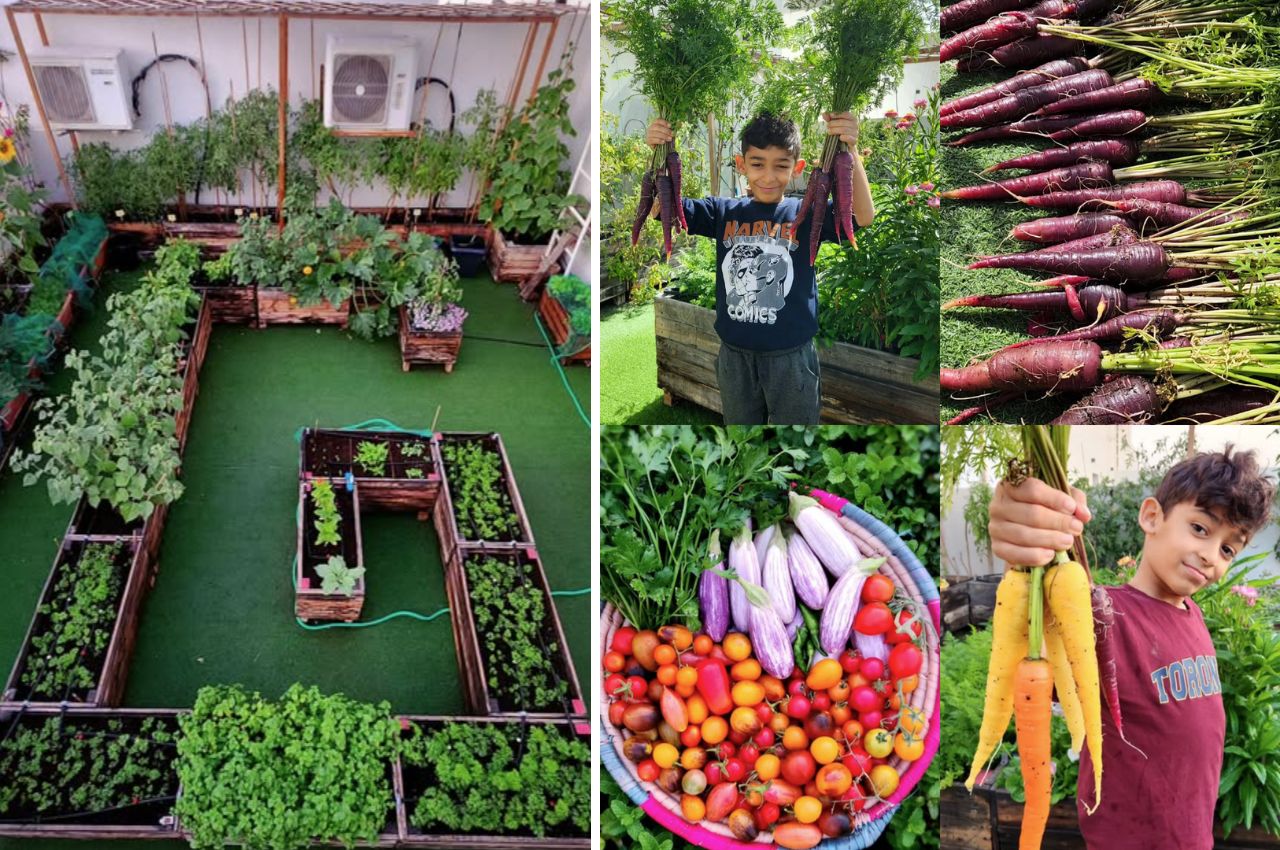
Al Alawi focuses on seasonal crops and vegetables in his home garden, including tomatoes, peppers, eggplants, zucchini, and carrots, as well as leafy greens such as mint, basil, lettuce, and kale.
What stands out in his experience is his dedication to growing carrots in different colors, including the lesser-known purple variety. He notes that purple carrot seeds are available in some commercial nurseries in Bahrain and that he has consistently grown them since moving his farming activities to the rooftop.
According to him, there is no difference between growing purple and orange carrots in terms of process or care. The crop typically takes between three to four months from seed to harvest, and it is considered a winter crop in the GCC, usually planted around late October.
In terms of taste, he points out that the difference is minimal, although purple carrots tend to be slightly sweeter. They also contain anthocyanin, a compound known for its antioxidant properties.
Al Alawi also highlights his commitment to organic farming, stressing that he avoids chemical fertilisers and pesticides, relying instead on natural methods in his home garden.
Beyond food production, he believes home gardening contributes to personal well-being by improving mental health and positively influencing interactions with family and society.
The plan includes expanding the planting of evergreen trees and increasing green coverage through government initiatives and community participation. It also aligns with Bahrain’s broader environmental commitments and reflects growing awareness of sustainability, which is also visible in individual initiatives such as home gardening.
Related Posts