

Heatstroke Warning Ahead of Summer Ban
TDT | Manama
Email: mail@newsofbahrain.com
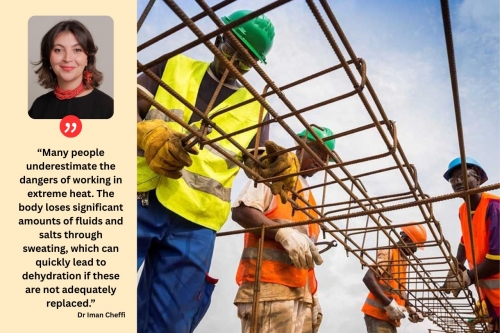
The dangers of working under direct sunlight during the summer months should not be underestimated, a Bahraini doctor has warned ahead of the start of this year's midday work ban.
Speaking exclusively to The Daily Tribune, Dr Iman Cheffi said the health risks associated with working under direct sunlight during the summer months should not be underestimated, warning that extreme heat can quickly escalate into a medical emergency.
Dr Cheffi warned that prolonged exposure to high temperatures can lead to severe dehydration, heat exhaustion and potentially life-threatening heat stroke, particularly among outdoor workers.
According to Dr Cheffi, workers exposed to excessive heat are also at risk of developing skin conditions such as severe sunburn and heat rash. In addition, dizziness and reduced concentration caused by high temperatures can increase the likelihood of workplace accidents and injuries.
She further noted that repeated exposure to extreme heat may have long-term effects on health, including chronic strain on kidney function.
The warning comes as the Labour Ministry announced the implementation of its annual midday work ban from June 15 until August 31. Under the regulation, outdoor work under direct sunlight will be prohibited between 12pm and 4pm.
Explaining the difference between heat exhaustion and heat stroke, Dr Cheffi said heat exhaustion is a serious condition that occurs when the body struggles to cool itself.
Symptoms include excessive sweating, headaches, dizziness, muscle cramps and fatigue, while body temperature generally remains below 40°C.
Heat stroke, however, is a medical emergency that requires immediate treatment.
"When body temperature exceeds 40 degrees Celsius, the body's cooling system can fail completely," she explained. "This can lead to confusion, delirium, seizures and loss of consciousness. Without urgent medical intervention, the condition can become life-threatening."
Dr Cheffi urged workers and employers to pay close attention to early warning signs, including intense thirst, dry mouth, headaches, sudden fatigue and dark-coloured urine.
To reduce the risk of heat-related illnesses, she advised workers to drink water regularly throughout the day without waiting to feel thirsty, take frequent breaks in shaded and well-ventilated areas, and wear light-coloured clothing that helps reduce heat absorption.
Related Posts