

UN-Based Shipping Corridor Model Proposed for Gulf Region
TDT | Manama
Email : ashen@newsofbahrain.com
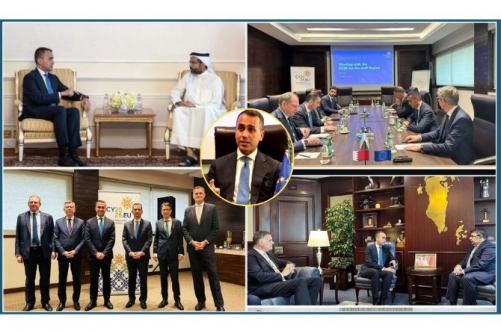
European Union Special Representative for the Gulf Luigi Di Maio said his visit to Bahrain sends a “clear message of solidarity” with the Kingdom amid rising regional tensions, strongly condemning what he described as “unjustified attacks” targeting civilian infrastructure.
Speaking in an exclusive interview during his short visit to the Kingdom, Di Maio stressed that Bahrain is a “strategic partner” of the European Union and that the visit reflects support for both Bahrain and its regional allies in the Gulf Cooperation Council.
“We want to show solidarity to the Kingdom of Bahrain for these absolutely unjustified attacks, particularly those targeting critical civilian infrastructure. This is totally unacceptable,” he said.
Partners
He added that the EU is working closely with GCC partners to support diplomatic efforts aimed at de-escalation and conflict resolution.
“We are promoting and supporting a UN initiative based on a model similar to the Black Sea Grain Initiative,” he noted, referring to efforts to secure humanitarian and commercial shipping corridors.
Di Maio warned that instability in the region particularly around the Strait of Hormuz poses a serious global risk. He called for ensuring freedom of navigation under international law and urged the United Nations to take a central role in facilitating a diplomatic solution.
“The Strait of Hormuz is international waters. Free navigation must be guaranteed,” he said, adding that any disruption could have major consequences for global trade, including oil, gas, fertilizers, and other essential goods.
Measures
He also revealed that EU member states are considering contingency measures in a de-escalation scenario, including maritime surveillance and escort operations to ensure safe passage for vessels.
“The main objective must remain diplomacy,” he said, emphasizing that military tensions are affecting not only regional stability but also global markets.
On broader geopolitical linkages, Di Maio said the EU sees increasing connections between conflicts in different regions, including Ukraine and the Gulf, particularly in relation to energy infrastructure attacks.
Attacks
“The same type of attacks against civilian infrastructure are happening in different theatres. That is why we must join forces,” he said.
He reiterated EU backing for international initiatives involving regional and global partners, including discussions with Gulf states, Egypt, Pakistan, and Turkey, and support for United Nations resolutions aimed at protecting regional security and stability.
Di Maio said unpredictability in global conflicts should not lead to inaction. “Even if the end of the war is uncertain, we must act now through diplomacy, de-escalation, and cooperation.”
Related Posts