

Smarter Health
Artificial Intelligence strengthens primary care but can’t replace human touch
TDT | Manama
Email: mail@newsofbahrain.com
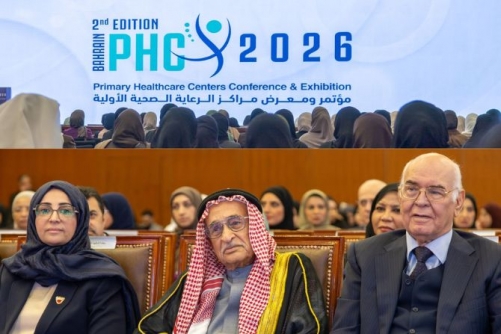
“Artificial Intelligence is an amplifier of primary health care, not its foundation. Primary care must always remain human at its core,” said Dr Yahya Alfarsi, Author and Professor of Epidemiology & Public Health at Sultan Qaboos University, Oman, speaking on artificial intelligence in medicine, at the second edition of the Primary Healthcare Conference and Exhibition which took off last Thursday at Gulf Hotel, Juffair.
The real goal, he said, is ‘smart populations’ - using technology not to replace humans, but to empower people to make healthier choices while keeping care personal, compassionate, and human-centred.
Challenges
One of the major challenges is determining what we should do by ourselves, and what should be delegated to robots and AI platforms.
Primary health care depends on information before it depends on intervention where digital tools are excellent in data generation, integration and providing indicators and analytics. We have wearables today which can record vital signs, track sleep patterns, monitor menstrual cycles, and apps that host wellness sessions and much more, capturing a holistic view of health like never before. They can support care pathways, improve efficiency, and even predict health risks.
But there is one thing AI cannot replace, human judgment, empathy, and connection. The old adage that ‘half of a patient’s illness is cured the moment a doctor truly listens’ remains as true as ever. While AI bots excel at generating and managing data, the interpretation, dissemination, and action on that information must remain in the hands of primary healthcare professionals, the action place being PHCs.
“If we don’t invest in making human-based decisions in primary health care today, mobile health platforms and digital tools could eventually become the ‘orchestrator’ of healthcare. But let’s be honest, primary care doesn’t live in sensors or screens, it lives in people,” said Dr. Yahya Alfarsi.
COVID times taught us this lesson very clearly. Technology made consultations easier, even remote but despite that, rates of depression and mental health challenges were on the rise. We realized that human interaction, listening, and empathy cannot be digitized.

Future
Looking closely at the health needs of GCC countries, non-communicable diseases take the largest share of the burden, followed by newborn and child health, immunization, oral and dental health, maternal care, and nutrition. But one area remains critically overlooked, mental health.
Mental health is the second-largest burden after non-communicable diseases, yet primary care services for it lag far behind as per statistics, reflecting a global challenge that even in countries with advanced technology, we often fail to prioritize what matters most, human well-being.
The session concluded with a powerful reminder - as we build smart cities, design digital populations, and embrace AI in healthcare, we must remember that primary health care is not digital, it is human, and the future of health depends on keeping it that way.
The second edition of Primary Healthcare Centers Conference and Exhibition 2026, organized by BDA Medical Events in partnership with the Supreme Council of Health, the Bahrain Family Physicians Association, the International Conference on Family Medicine, and the Kuwait Primary Health Care Conference, was held in the presence of His Excellency Lieutenant General Dr. Shaikh Mohammed Bin Abdulla Al Khalifa, Chairman of the Supreme Council of Health, Her Excellency Dr. Jaleela bint Al Sayed Jawad Hassan, Minister of Health, H.E. Dr. Abdulwahab Mohammed Abdulwahab and other dignitaries, featuring over 90 expert speakers from the GCC, Egypt, Lebanon, India, Ireland, and beyond.
Related Posts