

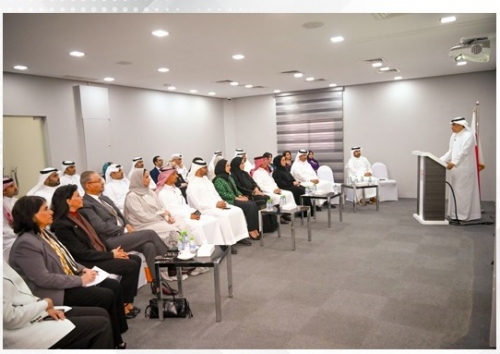
Bahrain Forum Explores Leadership Between Theory and Practice
TDT | Manama
Email: mail@newsofbahrain.com
Dr. Ali bin Mohammed Al-Rumaihi, Chairman of the Board of Trustees of the Bahrain Institute for Political Development, emphasized the critical role of leadership in upholding the core values of Bahrain’s national identity. Speaking at a forum organized by the Institute, he highlighted that true leadership represents a national responsibility before being an administrative position, and that an effective leader leaves a positive impact on both their institution and society.
Dr. Al-Rumaihi underscored the importance of motivational leadership as a cornerstone for institutional development and improved performance in the government sector. He described it as a practical approach that harnesses the potential of national talent, transforms challenges into opportunities, and fosters a culture of civic responsibility in line with Bahrain’s comprehensive developmental journey.
The remarks came during a dialogue session titled “Leadership Between Theory and Practice: A Personal Experience”, held as part of the Institute’s “National Pathways” program. The session was attended by several government leaders and directors.
During the discussion, Dr. Al-Rumaihi explored key leadership principles derived from practical experience, including avoiding overplanning, making decisive choices, team building, balancing work with recognition, and strengthening the culture of national loyalty and responsibility. He emphasized that leadership is less about holding a position and more about embodying a set of values and skills that positively influence the work environment.
He also highlighted the connection between leadership and media, noting that contemporary media has evolved beyond traditional reporting to shape public opinion and influence decisions. Using global and regional data, he addressed challenges related to credibility and the impact of social media.
The session further explored motivational leadership and the development of leaders, with Dr. Al-Rumaihi stressing that successful leaders cultivate leadership qualities in others by fostering an empowering work environment based on delegation and trust, rather than centralization. He also clarified that planning is a tool to achieve impact, not an end in itself.
The dialogue included active interaction with participants, featuring discussions and questions on leadership practices. The National Pathways program, implemented by the Bahrain Institute for Political Development, targets employees across the public and private sectors through a series of training events designed to enhance national participation, develop human capital, and raise civic awareness.
Related Posts