

‘Unite or Be Left Vulnerable’
AI Disruption Demands a New Cyber Order — Regional Chiefs Call for Unified Action
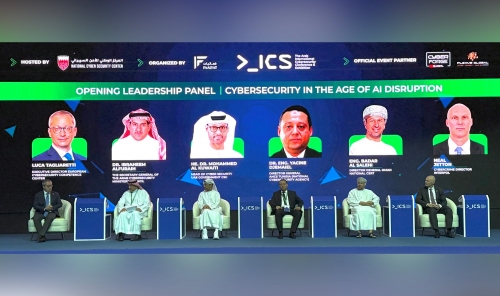
Regional and international cybersecurity leaders convened at the Opening Leadership Panel,Cybersecurity in the Age of AI Disruption, emphasizing the need for collaboration, capacity building, and responsible innovation to safeguard nations from rapidly evolving digital threats.
This collective call for cooperation emerged during the opening of the Arab International Cybersecurity Conference and Exhibition, which kicked off today.
Dr. Ibraheem Alfuraih, Secretary-General of the Arab Cybersecurity Ministers Council, underscored the importance of regional collaboration in combating cyber threats. He highlighted that the Council’s accession to the UN Cybercrime international body marks a significant milestone in uniting Arab efforts with global partners to enhance digital resilience.
Representing the UAE, H.E. Dr. Mohammed Al Kuwaiti, Head of Cybersecurity for the UAE Government, outlined five key pillars essential to building a secure digital ecosystem, Policy and governance, Capacity building, Partnerships, Innovation, Protection and defense.
Dr. Al Kuwaiti called for unity among nations and organizations to address shared threats, stating that “we must stand together against the growing sophistication of cyberattacks powered by artificial intelligence.”
From Tunisia, Dr. Eng. Yacine Djemaiel, Head of the National Cybersecurity Agency (ANCS), noted the emergence of new threats alongside expanding digital infrastructure. He emphasized leveraging AI for defense and developing common platforms across nations to strengthen collective cybersecurity.
Eng. Badar Al Salehi, Director-General of Oman National CERT, highlighted the economic implications of cybersecurity, calling it a vital pillar for sustainable growth. He stressed transparency, accountability, and regulatory compliance as key to public trust, while advocating for talent transformation to move from traditional IT roles toward advanced cyber defense capabilities.
Representing the international community, Neal Jetton, Director of Cybercrime at Interpol, warned of the rising misuse of AI by criminals. “Cybercriminals are now using AI to craft highly convincing phishing emails, generate malicious code, and even produce deep fake videos to deceive victims,” he said, urging greater cooperation between governments and private entities to combat AI-enabled crime.
Panelists collectively agreed that artificial intelligence, while transformative, also introduces new layers of risk requiring robust governance, ethical frameworks, and cross-border coordination. The discussion concluded with a shared vision: empowering regional and global communities to build a secure, transparent, and innovation-driven digital future.
Related Posts