

India Struggles to Break Its Growing Dependence on China
India is struggling to reduce its growing economic dependence on China, despite years of efforts to strengthen domestic manufacturing and limit imports from its powerful neighbour.
The challenge is illustrated by India’s toy industry, where higher tariffs and stricter quality standards have helped local manufacturers compete with Chinese products.
Six years ago, India increased tariffs on imported toys from 20% to 60%, eventually raising them to 70%. The measures contributed to a sharp decline in toy imports, while domestic production and exports increased.
Indian toy imports fell from nearly $300 million in 2020 to around $100 million this year, while exports increased from about $129 million to $200 million. China’s share of India’s toy market also dropped significantly from around 70%.
However, experts say the toy sector is an exception rather than a model that can easily be replicated across the entire economy.
Trade Gap Continues to Widen
India’s overall trade relationship with China has moved in the opposite direction.
Despite diplomatic tensions following the 2020 Galwan Valley clashes, anti-dumping measures and restrictions on Chinese technology and applications, India’s trade deficit with China has grown dramatically.
The deficit increased from $44 billion in 2020 to $112 billion this year, while Indian exports to China remained below pre-pandemic levels even as imports from China doubled.
“India’s economic dependence on China continued to deepen,” Kevin Zongzhe Li of the Asia Society Policy Institute’s Centre for China Analysis told the BBC.
Ajay Srivastava of the Global Trade and Research Initiative said China now supplies more than 30% of India’s industrial imports, with India depending on China for more than 100 critical products.
If the current pace of imports continues, India’s bilateral trade deficit with China could rise to $134 billion, potentially giving Beijing greater influence over Indian industries.
Manufacturing Still Relies on China
India has made progress in producing finished goods domestically.
The country has reduced its dependence on imports of products such as smartphones and solar equipment and now produces more than a quarter of the world’s iPhones.
But much of this production remains based on assembly rather than complete domestic manufacturing.
Indian factories still depend heavily on imported components, particularly from China. This means that even when a product carries the “Made in India” label, parts of its supply chain may remain closely tied to Chinese manufacturers.
Modi and Xi Seek to Address Imbalance
The issue became particularly important as relations between New Delhi and Beijing began to improve.
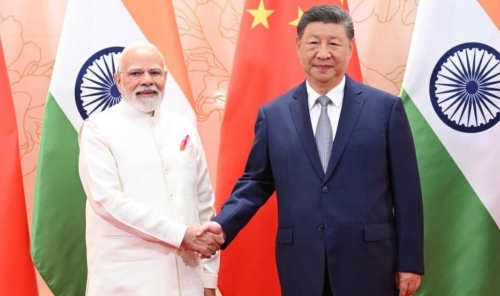
During the BRICS summit in Delhi in September, Indian Prime Minister Narendra Modi and Chinese President Xi Jinping agreed to work on addressing structural trade imbalances and supply-chain problems.
For India, however, reducing Chinese dependence will be a difficult task.
The country would need to expand domestic production of components, machinery, raw materials and other industrial goods while developing alternative international suppliers.
The experience of the toy industry demonstrates that government policies can reduce Chinese imports. But across India’s wider manufacturing economy, China has become deeply embedded in the supply chain.
The central challenge for New Delhi is therefore not simply to buy fewer Chinese products, but to build the industrial capacity needed to manufacture the components and materials that Indian companies currently obtain from China.
Related Posts