

AI keeps consumer prices high in ‘RAMaggedon’ chip crunch
AFP | Hong Kong
Email: mail@newsofbahrain.com
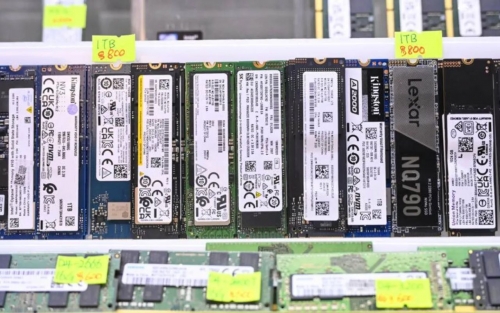
Print-outs of articles about the global memory chip shortage are pinned beside a price list at a Hong Kong computer shop, offering an explanation to confused customers feeling the pinch.
"When it suddenly gets so expensive, customers have a psychological barrier," Tam told AFP.
"If they need it, they will buy it," but otherwise they will wait, or "lower their standards" and buy a less high-performing memory chip, he said.
Chinese competition
Analyst Ellie Wang at the Taiwan-based market research firm TrendForce said memory prices for PCs and smartphones were up around five to six times compared to a year ago.
The AI boom has brought humungous profits and share price jumps to the world's top three memory chip makers: South Korea's Samsung Electronics and SK hynix, along with US giant Micron.
In fourth place is ChangXin Memory Technologies (CXMT), which became mainland China's most valuable company on Monday when it made its market debut in Shanghai -- another sign of how red-hot the sector has become.
CXMT, as a relative newcomer, "remains in a follower position regarding leading-edge technologies", James Zhao, senior principal analyst at Omdia, told AFP.
HBM is used in data centre servers to support other powerful chips -- such as those made by US titan Nvidia -- that execute the dizzyingly complex calculations of AI systems.
But when it comes to conventional RAM, and a type for computers called DRAM, "the current supply-constrained market environment" could bring CXMT "late-mover advantages", he said.
In Tokyo's tech hub of Akihabara, Charles Brousse, a 30-year-old graphic designer and custom PC builder from Belgium, said prices for RAM, graphics cards and motherboards have hit "ridiculous levels".
For his "PC & Chill" service, Brousse does not buy parts to pre-build machines -- as it is too expensive -- but he requires clients to purchase their own that he assembles.
The chip shortage is pushing people to buy cheaper laptops than desktops, which can last up to a decade, said Brousse, in Tokyo on his honeymoon.
"I'm not sure that's a good thing; people end up buying products with shorter lifespans, which fuels a cycle of consumption."
Brousse added that the fact it is driven by the "speculative bubble" of AI is also frustrating, "because I'm a graphic designer by trade, so AI has a real impact on my profession."
Related Posts