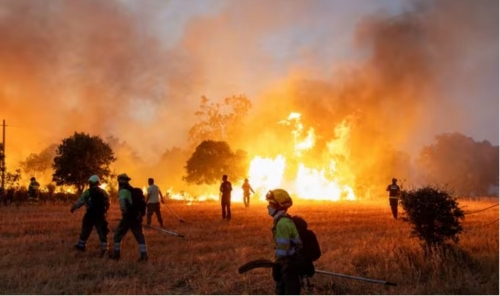
French firefighters said they were "reasonably optimistic" that a massive wildfire west of Bordeaux had stopped advancing after more than a week of intense firefighting efforts. Light rainfall improved conditions, although authorities warned that smouldering hotspots could still trigger fresh flare-ups.
The blaze has forced the evacuation of around 220,000 people, destroyed more than 200 homes, burned 42,000 hectares of land, and claimed the lives of two firefighters who became trapped while battling the flames.
Firefighting chief Marc Vermeulen described the situation as reaching a "tipping point," noting that the number of active hotspots had fallen significantly.
Local business owners warned that the region now faces a long recovery.
"It's the start of the end of the fire, but the start of the crisis," said Nina Rosazza, a factory owner near Bordeaux, pointing to the long-term impact on tourism, the environment and local communities.
Clooney Family Evacuated
Separate wildfires in southern France forced Hollywood actor George Clooney, his wife Amal Clooney and their nine-year-old twins to evacuate their estate near Brignoles.
In a letter to the town's mayor, the couple expressed concern for their home and pledged to help the community recover from the disaster.
Spain Lifts Emergency
In Spain, Prime Minister Pedro Sánchez lifted the state of emergency around Madrid after authorities confirmed there were no longer any active fire fronts threatening the area.
More than 60,000 residents had been evacuated during the height of the crisis, with most now allowed to return home.
However, officials remain concerned as another major wildfire in the neighbouring Ávila region has become the largest recorded in Spain since records began in 1961, consuming around 50,000 hectares of land.
A fresh heatwave sweeping across the country has raised fears that fires could reignite, while another wildfire near the Portuguese border forced the evacuation of more than 600 people from the town of Fermoselle.
Europe Still Under Threat
While conditions have improved in parts of France and Spain, deadly wildfires continue to burn in Greece, Portugal and Turkey.
Scientists say the increasing frequency and intensity of Europe's wildfires reflect the growing effects of climate change, with prolonged heat and dry conditions creating ideal conditions for large, fast-moving fires.